Every few weeks somebody asks us, politely and with real suspicion, whether saffron is a racket. It is a fair question. A gram of it costs more than a gram of almost anything else in the house, and from the outside the product is a small pile of dry red threads. So here is the arithmetic, with nothing hidden in it.
Saffron comes from the stigmas of Crocus sativus. Each flower produces exactly three. Not three in a lean year and five in a good one — three, every time, and they are the only part worth having. The rest of the flower is beautiful and useless.
Those three threads weigh almost nothing once dried. Depending on the year, the plants and how far the drying is taken, it takes somewhere in the region of a hundred and fifty flowers to make a single gram. Hold a gram in your palm — a modest pinch, nothing more — and you are holding the entire stigma yield of a flowerbed.
Then there is when. The crocus flowers in autumn, on its own schedule, over a window of two to three weeks. Not field by field in a convenient sequence — the whole crop, more or less at once. A farm either has the hands available in that fortnight or it loses the year.
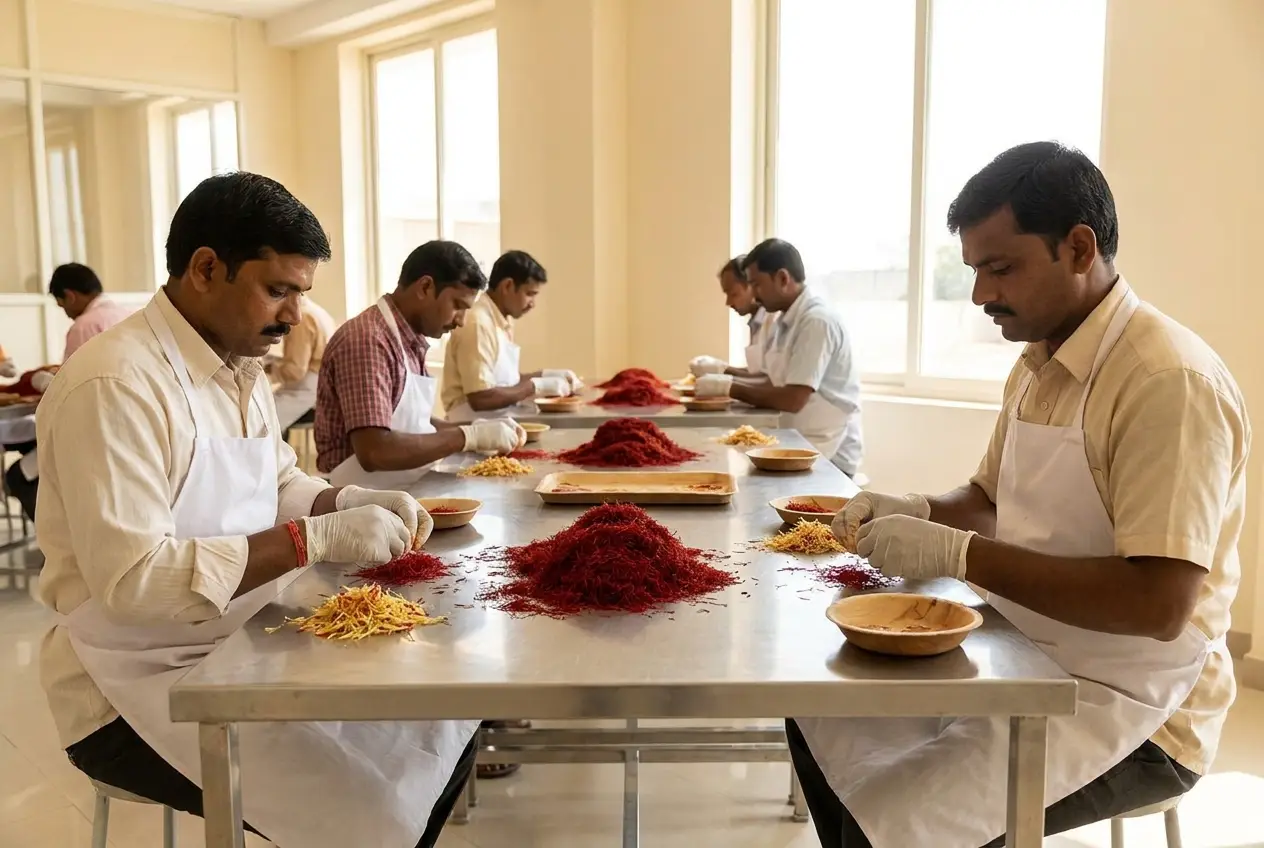
And the hands have to be human. The flowers open at dawn and wilt in sun, so picking happens early and fast, bent double, flower by flower. Then every flower is opened by hand and the three threads drawn out without crushing them. No machine does this. People have tried for a century; the problem is that a stigma is delicate, the flower is soft, and the difference between a whole thread and a broken one is worth real money. So it stays a job done by fingers, in a hurry, once a year.
After that comes drying, which sounds like the easy part and is where a great deal of value is lost. Dry too hard and the aroma goes. Dry too little and the threads will not keep. The three compounds that make saffron worth buying — crocin for colour, picrocrocin for flavour, safranal for that sweet hay-like smell — are all affected by how the drying is handled.
Put it together: a crop that yields three threads per flower, flowers for a fortnight, must be picked by hand at dawn, must be processed by hand immediately, and can be ruined in the last step. That is the cost. It is not branding.
Which leads to the useful part. If saffron is cheap, something in that chain did not happen. Either the threads are not saffron — dyed corn silk and coloured safflower are the usual stand-ins — or they are saffron bulked out with something heavier and cheaper, or they are old stock whose aroma has gone and whose colour is being propped up.
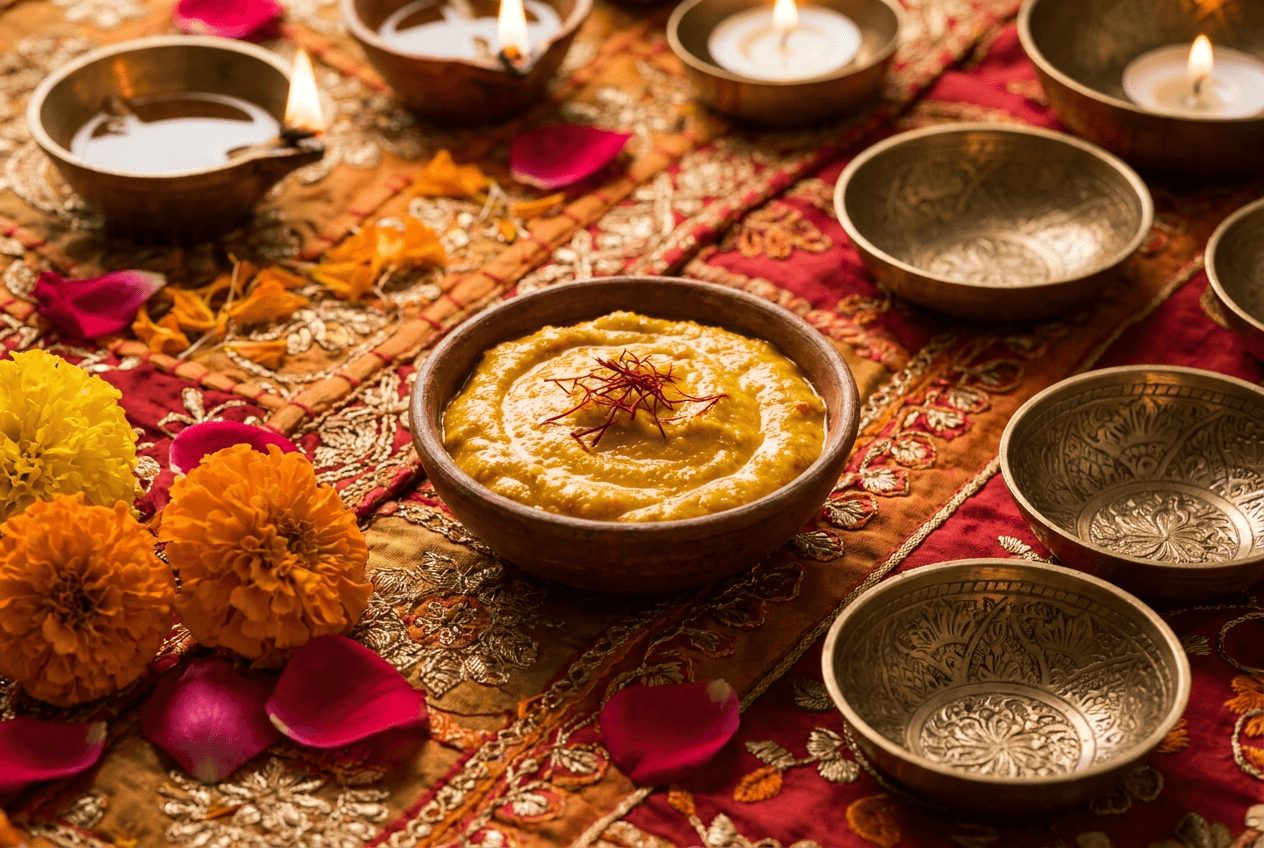
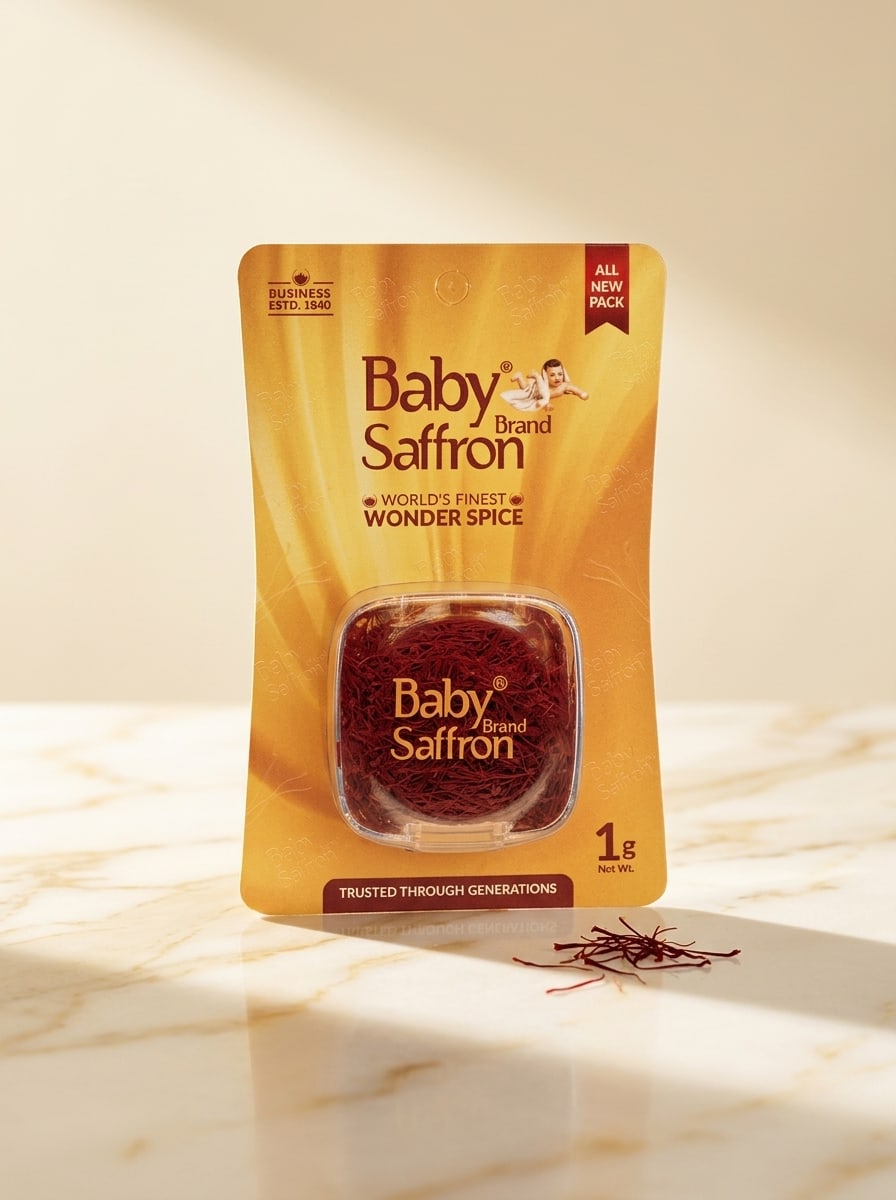
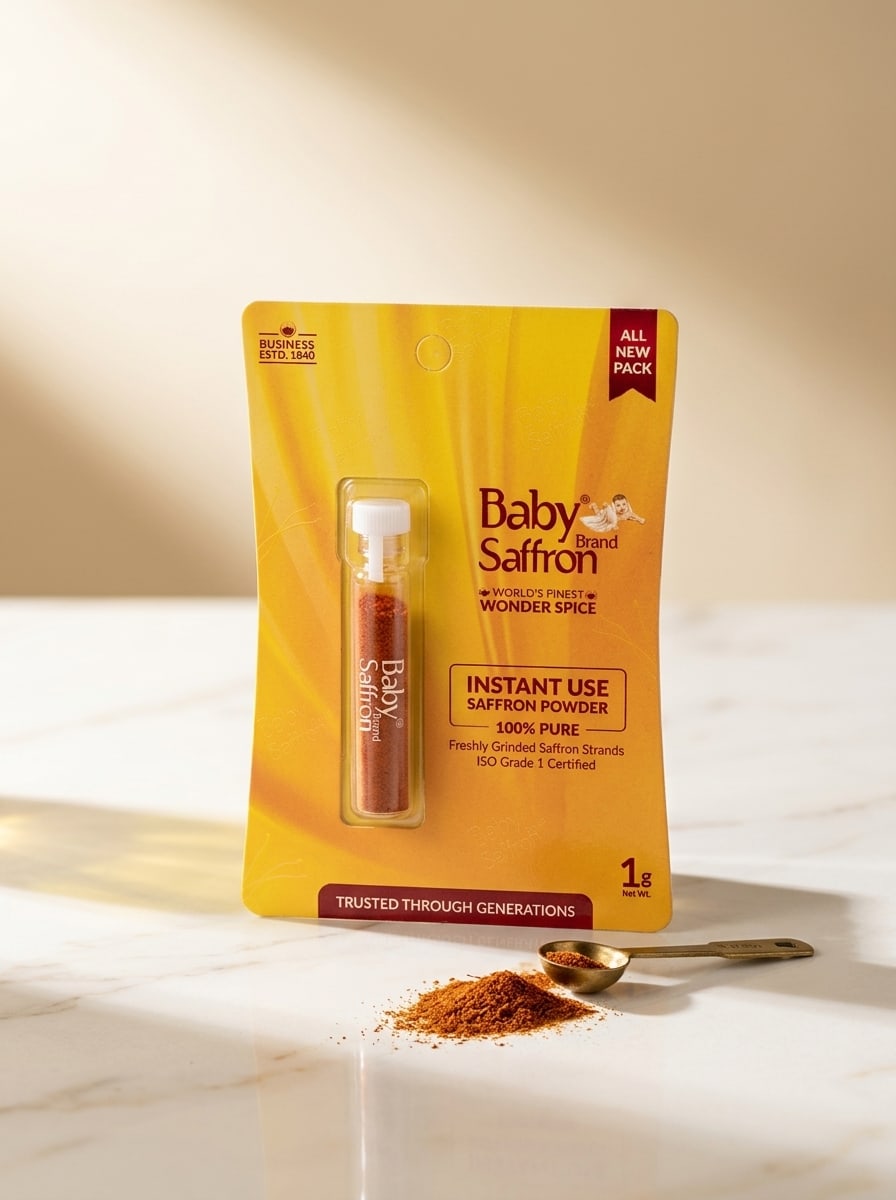
The honest consolation is that you need very little. A pinch blooms a full pot of kheer. A few threads make a cup of milk. Bought well and stored well, a gram lasts a household a long time, and the cost per serving of real saffron turns out to be far less alarming than the price per gram suggests.