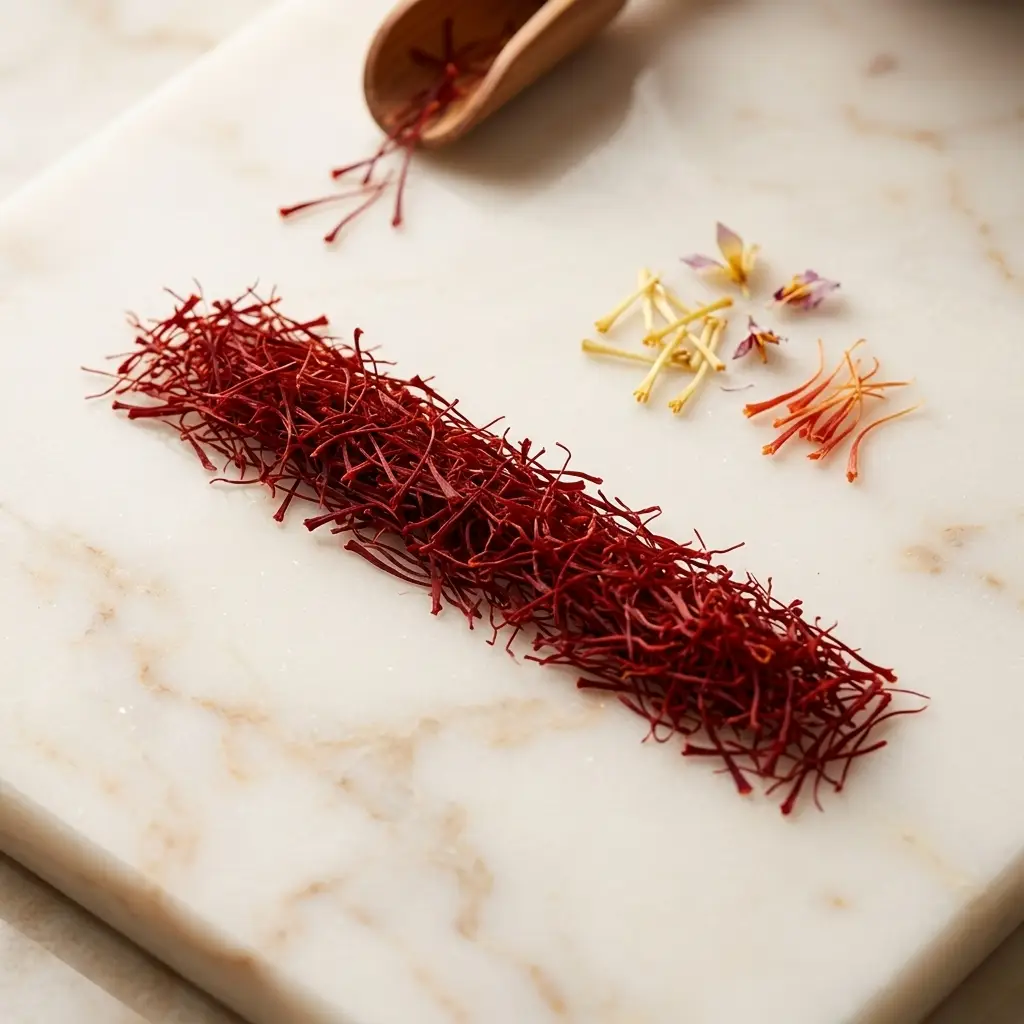
Seven tests. Every lot. Here are the results.
Most of what makes saffron good happens after it's picked — in a cold room, on a sieve, under a pair of hands. This is all of it, with the numbers.
- cold from the day it lands
- 4 °Ccold from the day it lands
- humidity where it's packed
- 45–55%humidity where it's packed
- tested before it leaves
- Every lottested before it leaves
- colour strength, batch 1841 · min 200
- 230.4colour strength, batch 1841 · min 200
What never makes it into the tin
- The yellow style
Adds weight, carries almost none of what you are paying for.
- Pollen
Dust on the scale, not saffron.
- Broken threads
Separated from whole, so a grade means one thing.
- Excess moisture
Held under 12%, so you are not buying water.
- Grit and sand
Tested for on every lot — acid-insoluble ash, max 1%.
Six stages, in the order they happen
Not stages we chose to describe — the scope of the facility’s GMP and HACCP certificate, in its own order (Intertek, 0155825).
- 101 · Receipt
Cold from the moment it lands.
Lots arrive from the harvest and are held cold from the moment they land. Saffron loses aroma to warmth, light and moisture faster than almost anything else in a kitchen, and the losses start on day one rather than on a shelf months later.
Held to: Stored at 4 °C, from receipt onwards.
- 202 · Sieving
Thick from thin. Whole from broken. Pollen out.
Machine sieving separates the lot by physical grade: thick threads from thin, whole threads from broken, and pollen out of both. A thread's thickness and whether it is intact are not cosmetic — they track how the stigma was picked and handled.
Held to: Pollen removed; thick/thin and whole/broken separated.
- 303 · Sorting
The yellow comes out by hand.
The yellow style is removed by hand. It is the pale part below the red stigma, it carries far less crocin, picrocrocin and safranal than the red, and leaving it in is the quiet way to add weight to a lot without adding anything measurable to it. Machines do not do this reliably; people do.
Held to: Hand-removal of yellow parts from every lot.
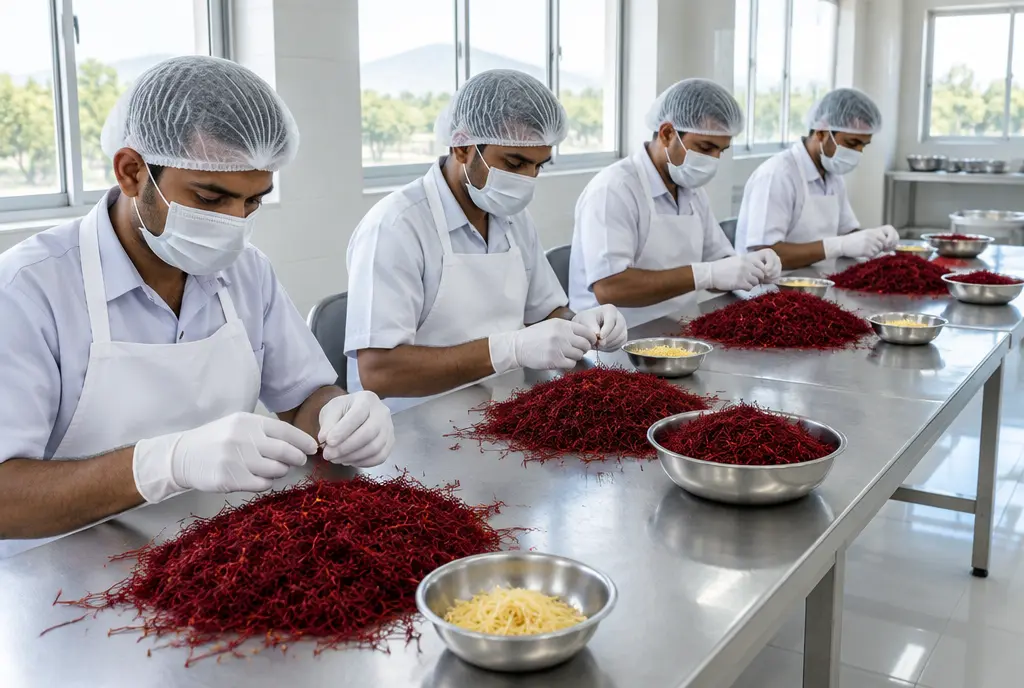
Illustration. - 404 · Drying
The parameter that fails both ways.
Moisture is the parameter that cuts both ways. Too much and the lot will grow mould and sell water by weight; too little and the aroma has already gone. ISO 3632 Grade I allows a maximum of 12% moisture and volatile matter, and it is the first line on every certificate of analysis for a reason.
Held to: Under 12% moisture and volatile matter (the ISO 3632 Grade I limit).
- 505 · Packaging
A dry lot in a damp room is a wet lot.
Packed in a humidity-controlled room and sealed tamper-evident. The humidity number matters more than the room does: saffron pulls moisture out of the air, so packing a correctly dried lot into a damp room undoes the drying.
Held to: 45–55% relative humidity; tamper-evident seal.
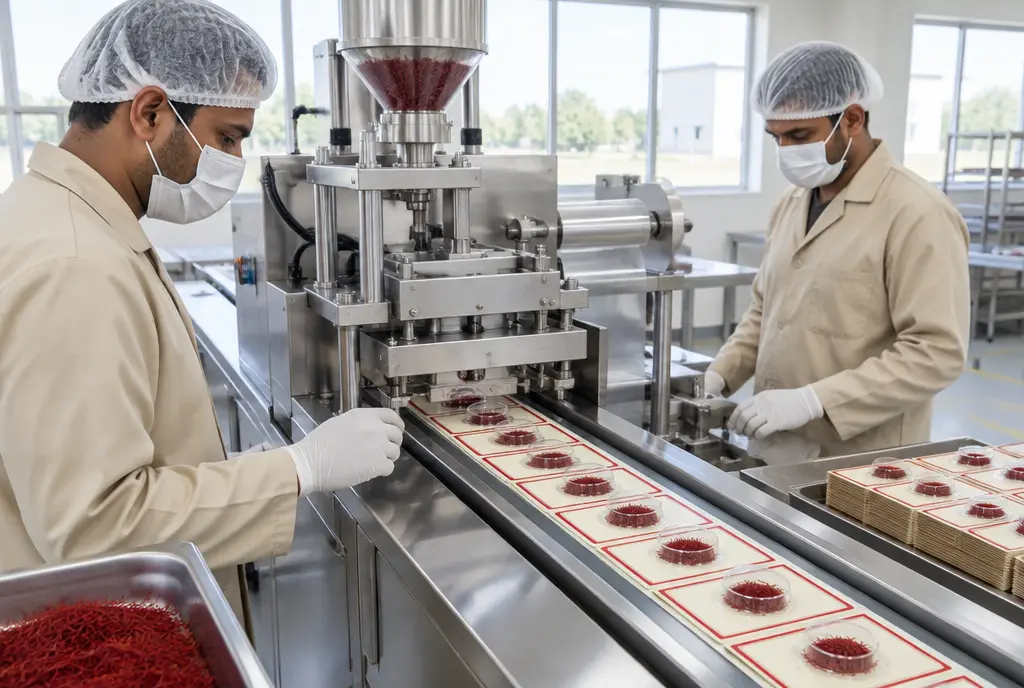
Illustration. - 606 · Dispatch
One batch number, one report.
Each lot leaves under its own batch number, which is printed on the tin. That number is what ties the saffron in your hand to the certificate of analysis for the lot it came from — email it to orders@babysaffron.com and we will send you that report.
Held to: Batch number on every tin.
Every tin in our shop went through all six.
Shop saffronSeven tests, and what each one catches
A grade is a pass mark on seven separate measurements. Each one is there because it catches something specific.
Moisture & volatile matter
Max. 12%Under-drying, which grows mould and sells you water by weight. Over-drying shows up elsewhere — as lost aroma.
Total ash
Max. 8%Mineral matter that is not saffron.
Acid-insoluble ash
Max. 1%Sand, dust and grit — the cheapest way to add weight to a lot.
Cold-water extract
Max. 65%Added sugar or honey, which are the usual carriers for dye.
Flavour — picrocrocin, 257 nm
Min. 70Weak or spent saffron, including threads that have already been extracted once and dried again.
Aroma — safranal, 330 nm
20 to 50Too little means stale or over-dried. Too much means heat damage or something added. The one test where a bigger number is also a fail.
Colour — crocin, 440 nm
Min. 200Dilution with weaker material. The headline number on any label, and the one most worth asking a seller for.
Here’s what one lot actually measured
Want your own batch’s report? Email the batch number on your tin to orders@babysaffron.com.
Three molecules, most of what saffron is
Crocin
Carries the colour.
Read as absorbance at 440 nm and reported as colouring strength — the single most useful number on a saffron label. ISO 3632 Category I starts at 200.
Picrocrocin
Carries the flavour, and the characteristic bitterness.
Read at 257 nm. Category I requires a minimum of 70. It is also why real saffron smells sweet and tastes bitter — the test most buyers read backwards.
Safranal
Carries the aroma — the honey-and-dried-hay smell.
Read at 330 nm, and the one parameter with a ceiling as well as a floor: Category I wants 20 to 50. A number above the range is not a better saffron, it is a sign of heat damage or something added.
They’ve been studied for more than flavour. That’s a separate subject with a separate standard of evidence, so it lives where the citations are — what the research shows and the studies themselves. Baby Saffron does not make medical claims.
How the testing is run
Every lot, not a sample of lots
Each lot is tested against ISO 3632 before it is released. A grade quoted for a brand is an average; a grade quoted for a lot is a measurement.
Retained samples, kept for years
A sample of each lot is kept in storage. It is what makes a result checkable after the fact rather than only at the moment it was taken — if a question is ever raised about a batch, the saffron it was raised about still exists.
Shelf-life testing
Lots are held and re-measured to see how the numbers move over time, which is the only way to know what a pack is actually like at the end of its life rather than on the day it was packed.
Packaging immersion tests
Packaging is water-tested for seal integrity. A tamper-evident seal that does not keep moisture out protects the packaging claim and not the saffron.
The laboratory is our own and holds no third-party accreditation — which is exactly why the full report is published rather than described.
Every one of these passed all seven
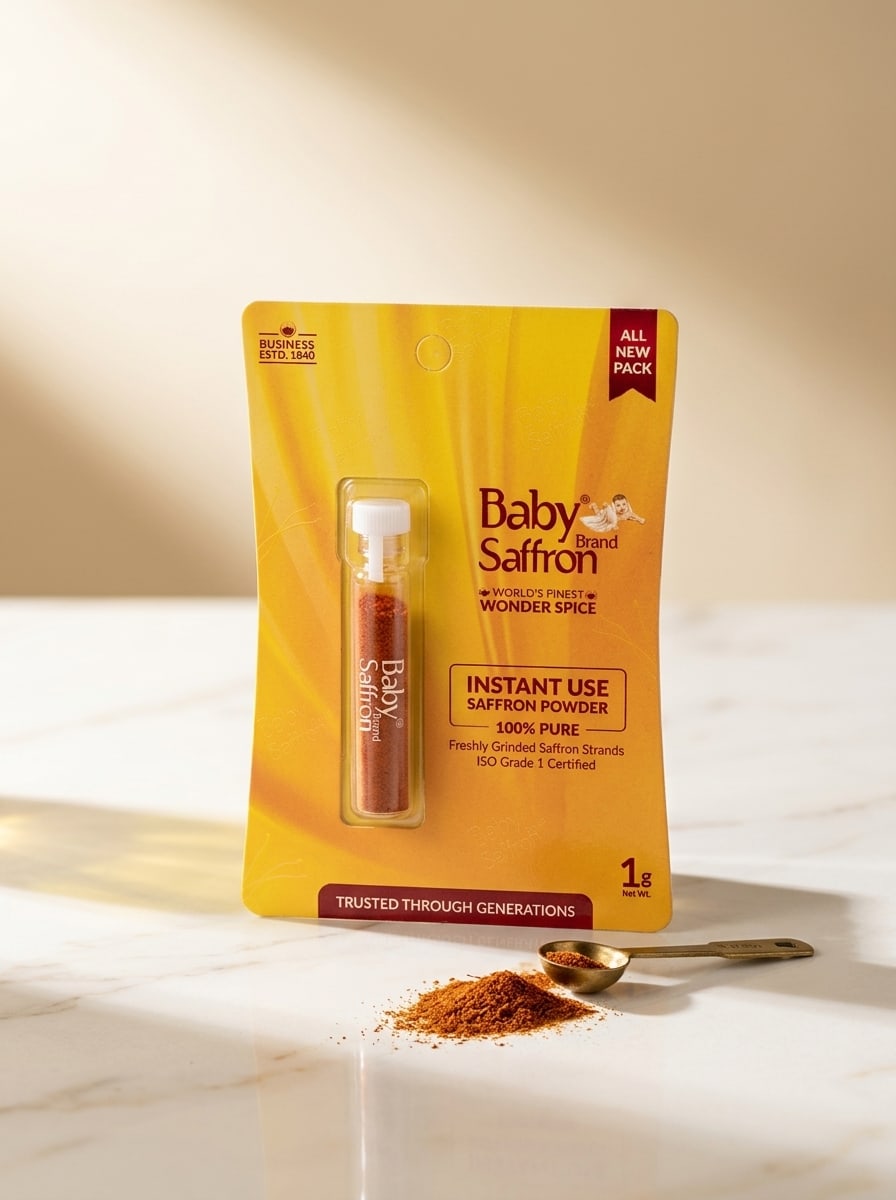
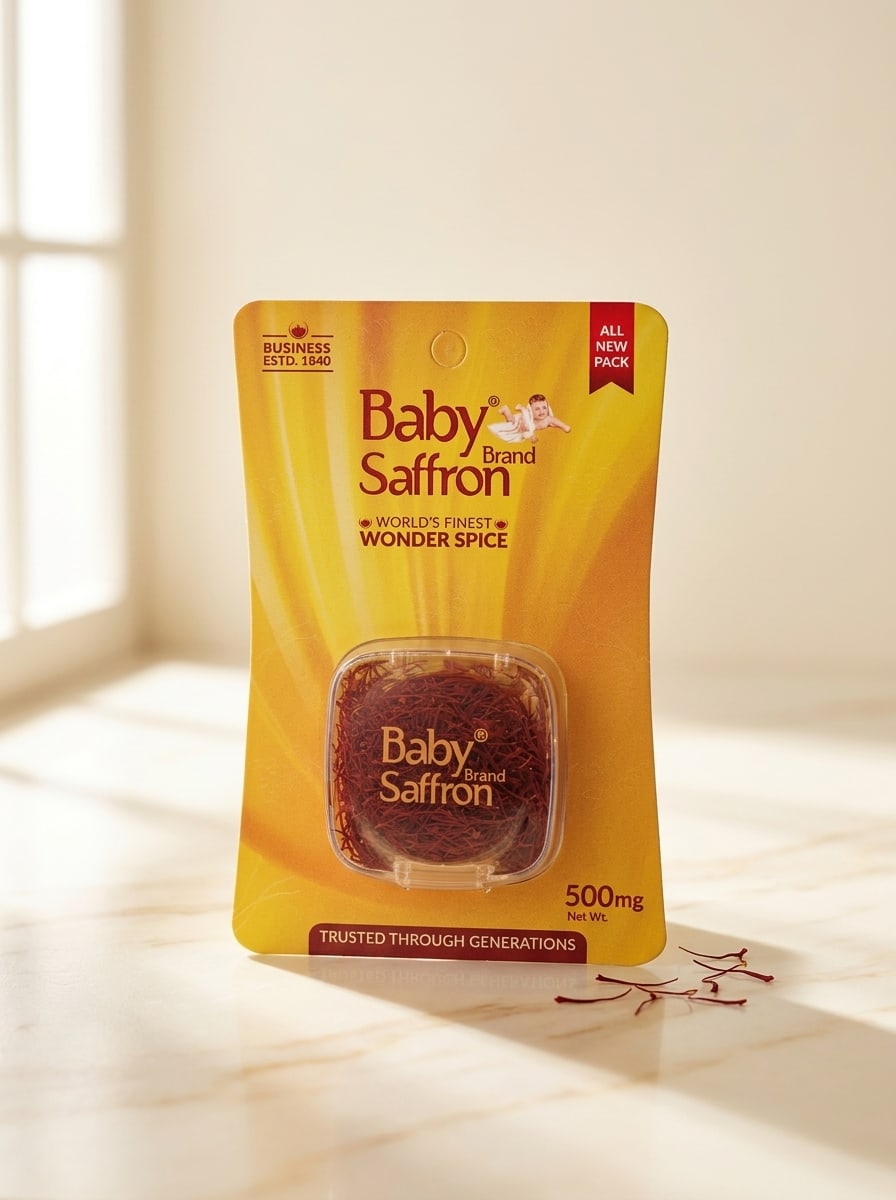
Same process, same tests, every pack size.
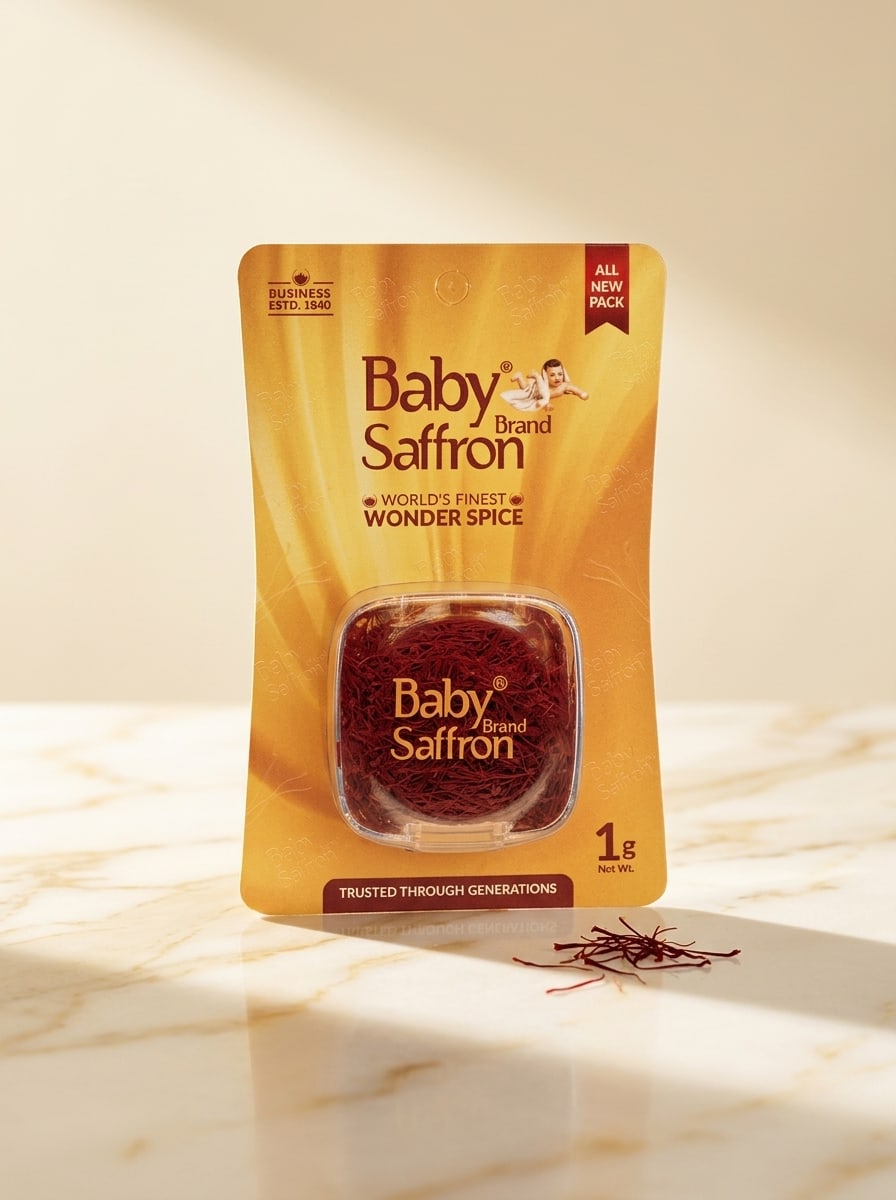 Bestseller
Everyday premium saffron for milk, sweets, and rituals.
ISO Grade 1 · 200+ colour
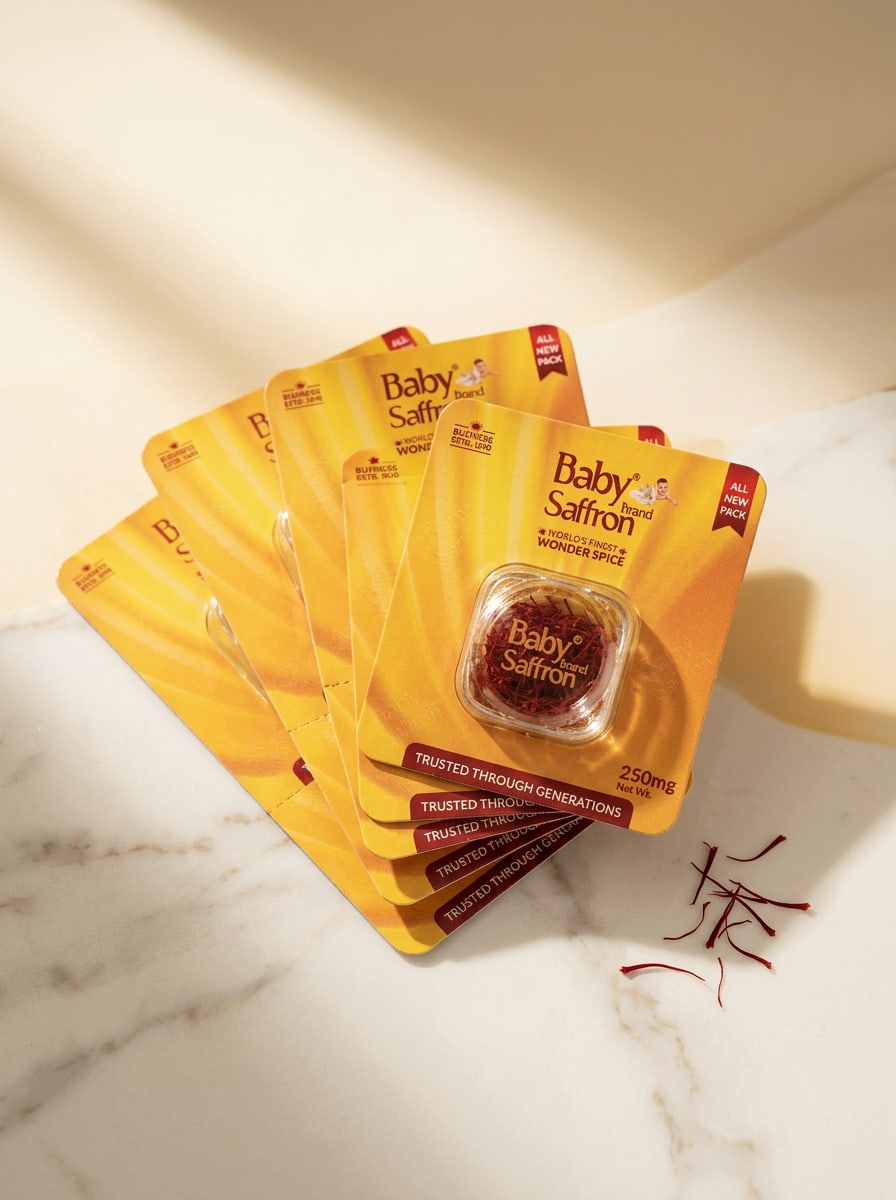
Sold as a set of 4 single-use 250mg blisters of pure kesar.
ISO Grade 1 · 200+ colour
Common questions
How is Baby Saffron stored after harvest?+
At 4 °C from the moment a lot is received, and packed in a room held at 45 to 55% relative humidity. Saffron loses aroma to warmth, light and moisture faster than almost anything else in a kitchen, and the losses begin at receipt rather than on a shelf months later. The humidity matters as much as the temperature: saffron draws moisture out of the air, so packing a correctly dried lot into a damp room undoes the drying.
How is saffron sorted and graded?+
In two passes. Machine sieving separates the lot physically — thick threads from thin, whole threads from broken — and takes the pollen out. Then the pale yellow style is removed by hand. The yellow part carries far less crocin, picrocrocin and safranal than the red stigma, so leaving it in adds weight without adding anything measurable.
Is every batch of Baby Saffron tested?+
Every lot, against ISO 3632, before it is released — not a sample of lots. A sample of each lot is then kept for years, lots are re-measured for shelf life, and packaging is water-tested for seal integrity. Batch 1841 measured a colouring strength of 230.4 against a minimum of 200; its full certificate is published at babysaffron.com/certifications.
What do the seven ISO 3632 tests actually check for?+
Each one catches something specific. Moisture catches under-drying; acid-insoluble ash catches sand and grit; cold-water extract catches added sugar or honey, the usual carriers for dye; picrocrocin catches weak or already-extracted saffron; crocin catches dilution. Safranal, the aroma, has a ceiling as well as a floor — 20 to 50 — because a number above the range means heat damage or an additive rather than a better saffron.
What do crocin, picrocrocin and safranal do?+
Crocin carries saffron's colour, picrocrocin its flavour and bitterness, and safranal its aroma. They are the three things ISO 3632 measures. Research on them beyond the kitchen is summarised, with citations, on babysaffron.com/health-benefits; Baby Saffron does not make medical claims.
What hygiene rules apply where saffron is handled?+
A hand-washing policy for everyone handling product, and masks and caps on the floor. The facility is certified to GMP and HACCP by Intertek (certificate 0155825), and Baby Saffron is packed by USMS Saffron Co. Inc. under FSSAI Central Licence 12217010000080.