A pinch of saffron a day — backed by real science.
Baby Saffron distils peer-reviewed research on saffron into plain, honest numbers — what changed, by how much, and the study behind every one. The trials behind these results typically use 30 mg of saffron a day, about the weight of a pinch of threads.
Read this first. Saffron is a food, not a medicine. Everything below reports what researchers measured in published trials — it is not a treatment for any condition, not a substitute for medical advice, and not a reason to change or stop anything you have been prescribed. Speak to a doctor, particularly if you are pregnant, breastfeeding or on medication.
What the science actually found.
No jargon — just the headline results, in numbers you can feel. Tap any card to read the study it came from.
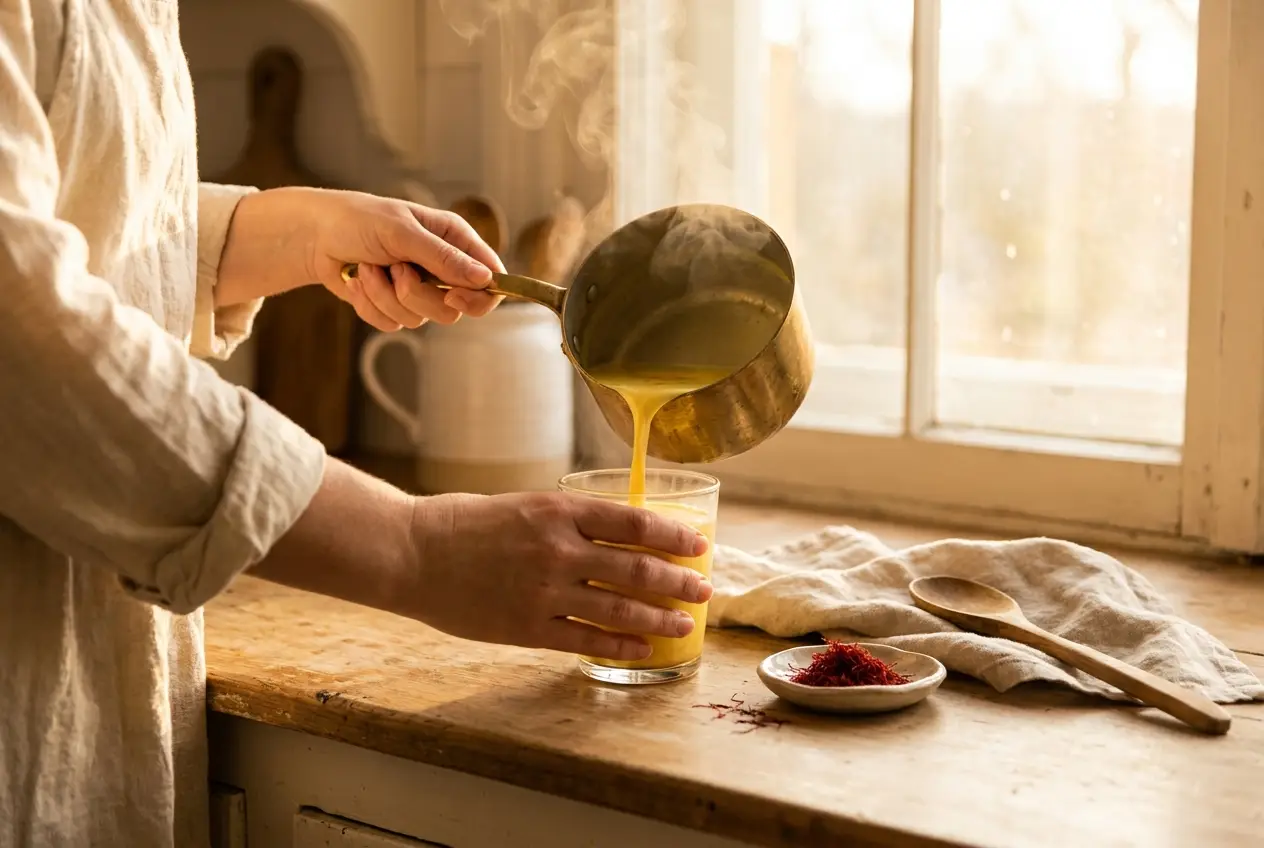
Most benefits show up at just 30 mg a day.
That's about the weight of a pinch of threads — a glass of kesar milk, a sweet, a daily ritual. Saffron's active compounds, crocin and safranal, do the work.
What it does, across your life.
Mind & Mood
Saffron's most-studied benefit.
Saffron is the most-studied spice in this area: across 46+ randomised trials and several meta-analyses, researchers have measured consistent improvements in mood and stress scores, with fewer reported side effects than the comparators used in those trials.
Sleep
What sleep trials measured.
Five RCTs across 379 participants in three countries show saffron improves sleep duration and quality. EEG studies show shorter time-to-fall-asleep and fewer night awakenings.
Metabolism
Glucose and HbA1c in trial participants.
32-study meta-analysis (n=1,674) and a focused 15-RCT diabetic meta-analysis (n=869) both find saffron lowers fasting glucose and HbA1c at standard nutritional doses.
Heart & Circulation
Lipids and blood pressure in trial participants.
Pooled meta-analyses across 32 studies show saffron lowers triglycerides, total cholesterol, LDL ('bad') cholesterol, blood pressure, and the inflammation marker TNF-α.
Eyes & Vision
What retinal studies reported.
Crossover RCTs in Age-Related Macular Degeneration (AMD) show measurable gains in visual acuity even on top of standard AREDS supplements. A Stargardt-disease trial saw saffron preserve retinal function while placebo declined.
Weight & Appetite
Weight and waist measures in trials.
25-RCT meta-analysis on anthropometrics shows significant reductions in waist-to-hip ratio. A 10-study cardiometabolic meta-analysis shows modest weight and waist-circumference improvements.
Women's Health
Studies across the female life course.
Saffron has been studied across the whole arc of women's health — PMS symptom severity, perimenopausal mood, mood after childbirth, and labour outcomes.
Men's Health
What the men's health trials measured.
Two RCTs and a 14-RCT meta-analysis show saffron significantly improves erectile and orgasmic function in men, including those with SSRI-induced ED.
Memory & Attention
Memory and attention in trial participants.
Saffron has been studied head-to-head against donepezil and memantine for Alzheimer's, and against methylphenidate (Ritalin) for paediatric ADHD — with non-inferior efficacy and better tolerability in multiple trials.
Studies in cancer care
Small studies alongside cancer treatment.
Crocin (a saffron-derived compound) has been studied as supportive care during chemotherapy — reducing anxiety, depression, hypersensitivity reactions, and peripheral neuropathy pain.
What the head-to-head trials reported.
A handful of small trials have compared saffron directly with prescription medicines — fluoxetine and other SSRIs for mood, donepezil for cognition, methylphenidate for attention. In each, the researchers reported no statistically significant difference on the trial’s own scale, and in some, fewer side effects in the saffron arm.
Those are small studies, mostly short, and “no significant difference” is not the same as “equivalent” — it often means the trial was too small to detect one. We report them because they exist, not as a reason to change anything. Saffron is a food. It is not a treatment for any condition, and nothing here is a reason to alter or stop a prescribed medicine. Every study behind this is listed, with its grade, on the research page.
One number, and a ceiling.
Across the studies on this page the amount used clusters around 30 mg a day — roughly a pinch of threads — the amount most of the trials on this page used. That is what the researchers gave their participants. It is not a recommendation, and saffron is not a treatment for anything.
Safety ceiling: Under 1.5 g a day. Above 5 g is toxic. Ordinary cooking uses a tiny fraction of that, but the number is worth knowing, and it is the one figure here that exists to warn rather than to inform.
Get the full Saffron Health Bible.
A plain-language, fully-referenced guide to the human science on saffron — every study, effect size, dose, and safety note — sent straight to your inbox.
- • Peer-reviewed studies, in plain English
- • Effect sizes, doses & durations
- • Drug-comparison tables & safety