There are two reasons people look up saffron substitutes. One is that a recipe calls for it and there is none in the house. The other is that somebody is about to be sold something. The same information helps in both cases.
Start with what saffron contributes, because a substitute can only replace what you can name. Saffron does three things: it colours, it adds a specific bitter-floral flavour, and it smells of sweet hay. Most substitutes do the first and nothing else.
Turmeric is the one most people reach for, and for colour alone it is perfectly honest. It will make rice yellow. It will not make it taste of saffron — turmeric is earthy and slightly musty where saffron is floral and faintly sweet, and in a delicate dish like a kheer or a plain pulao that difference is not subtle. Use it when you want yellow and do not mind tasting turmeric. A small pinch goes a long way; too much turns a dish bitter and a little dusty.
Safflower — kusum, sometimes called bastard saffron — is the substitute most likely to arrive pretending to be the real thing. It comes from a different plant entirely, the threads are flatter and more orange, and it gives a reddish-yellow tint with essentially no aroma. Sold as safflower it is an inexpensive colouring. Sold as saffron it is a fraud, and it is the commonest one.
Annatto is a seed used widely for colour in cheeses and rice dishes, giving an orange-yellow tone. Same story: colour yes, saffron flavour no.
Marigold petals turn up in cheap blends, dried and cut to look like threads. Colour only, and not much of it.
What none of them have is safranal, the compound responsible for the smell. That is the honest summary: you can replace saffron's colour for a few rupees, and you cannot replace its aroma at any price, because the aroma is the part that is expensive to produce.
So the advice splits.
If the dish is about colour — a rice where saffron is one note among several strong ones, a biryani already carrying whole spices — turmeric will get you a long way and nobody will be upset.
If the dish is about saffron — kesar doodh, kheer, a simple pulao, anything where you would notice its absence — there is no substitute, and a smaller quantity of real saffron beats a larger quantity of something else. A few threads properly bloomed in warm milk outperform a spoon of turmeric by a distance, because what you wanted in the first place was the smell.
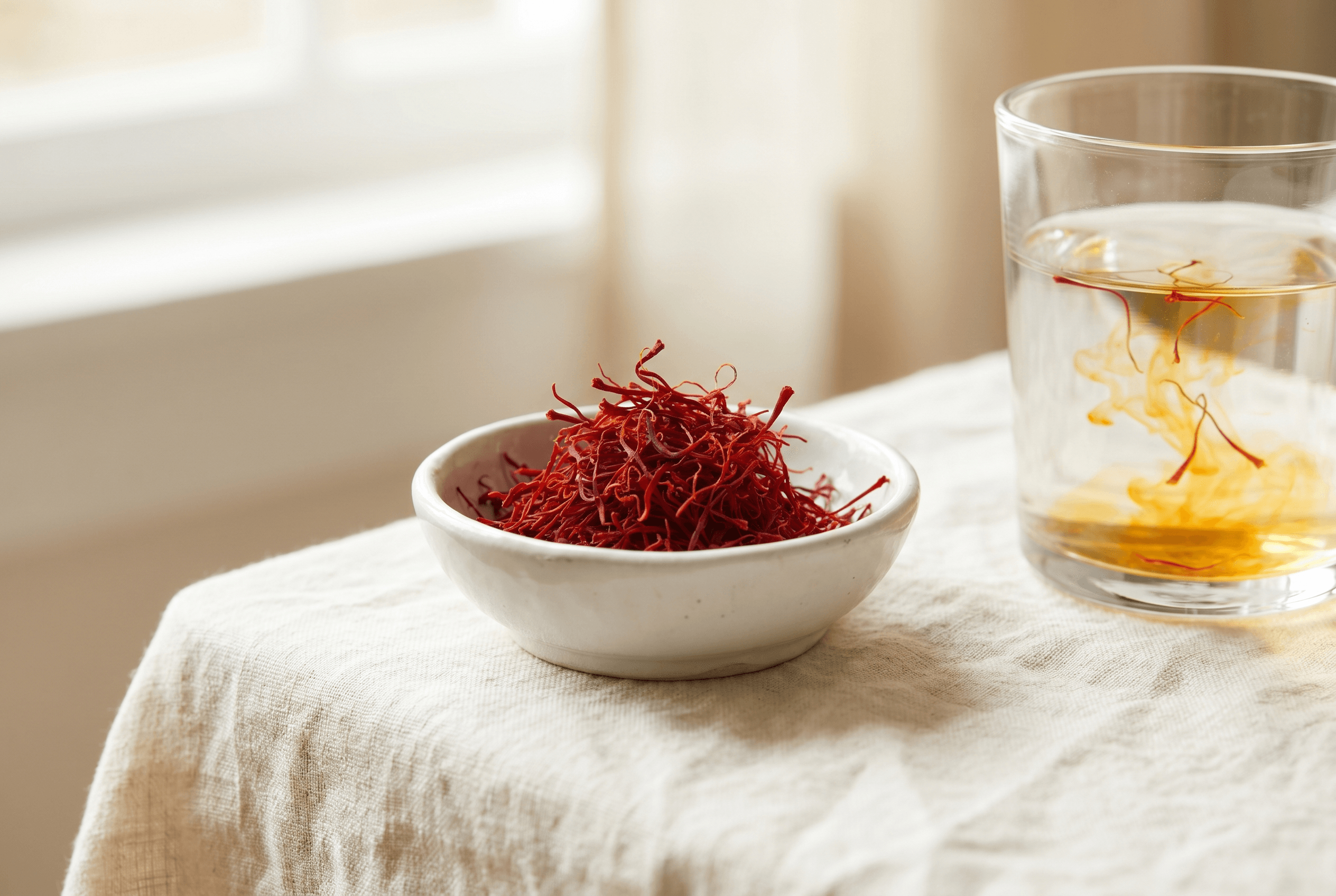
And when buying: if threads are flat rather than trumpet-shaped, uniformly orange rather than deep red with a paler tip, or give up their colour the instant they touch water, you are looking at safflower. The water test settles it in about a minute. Real saffron colours the water slowly and stays red itself. A dyed substitute bleeds immediately and goes pale.