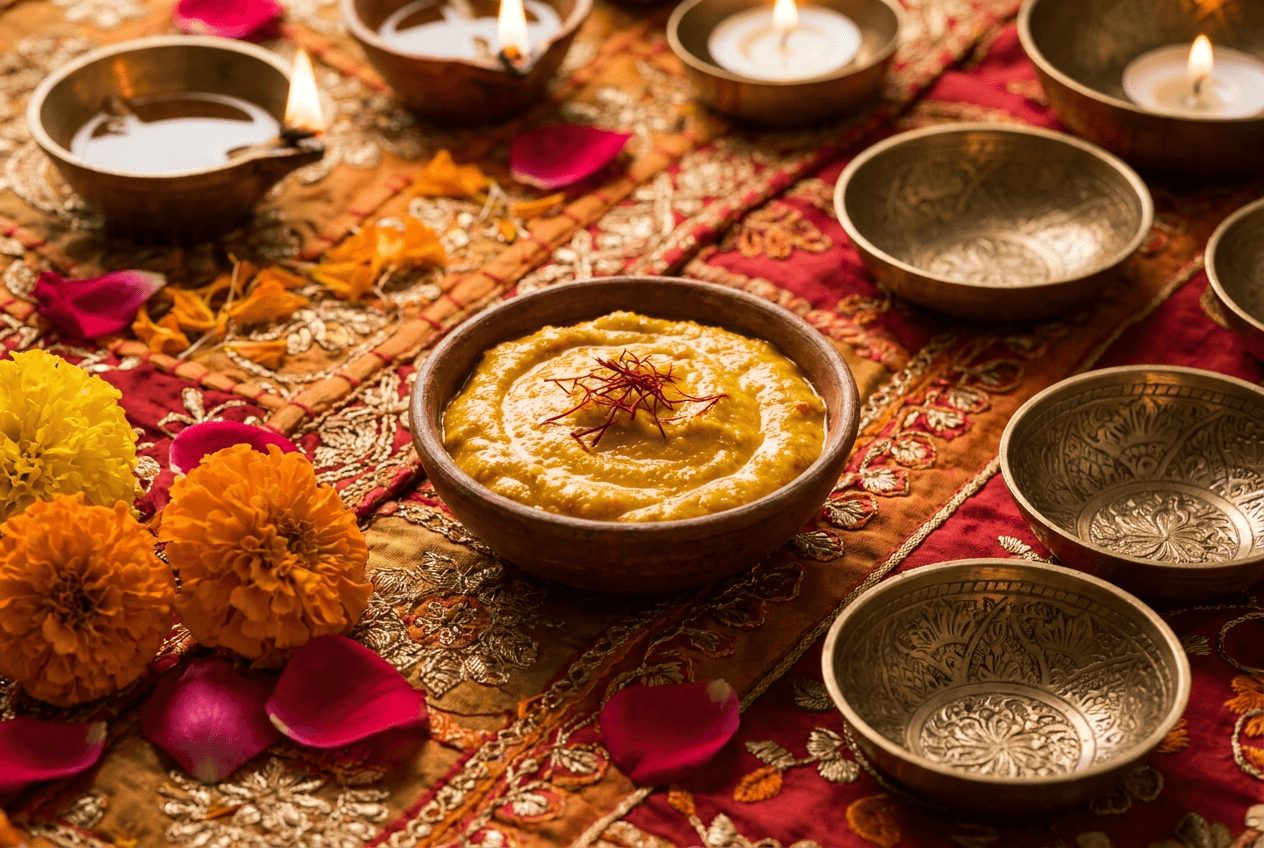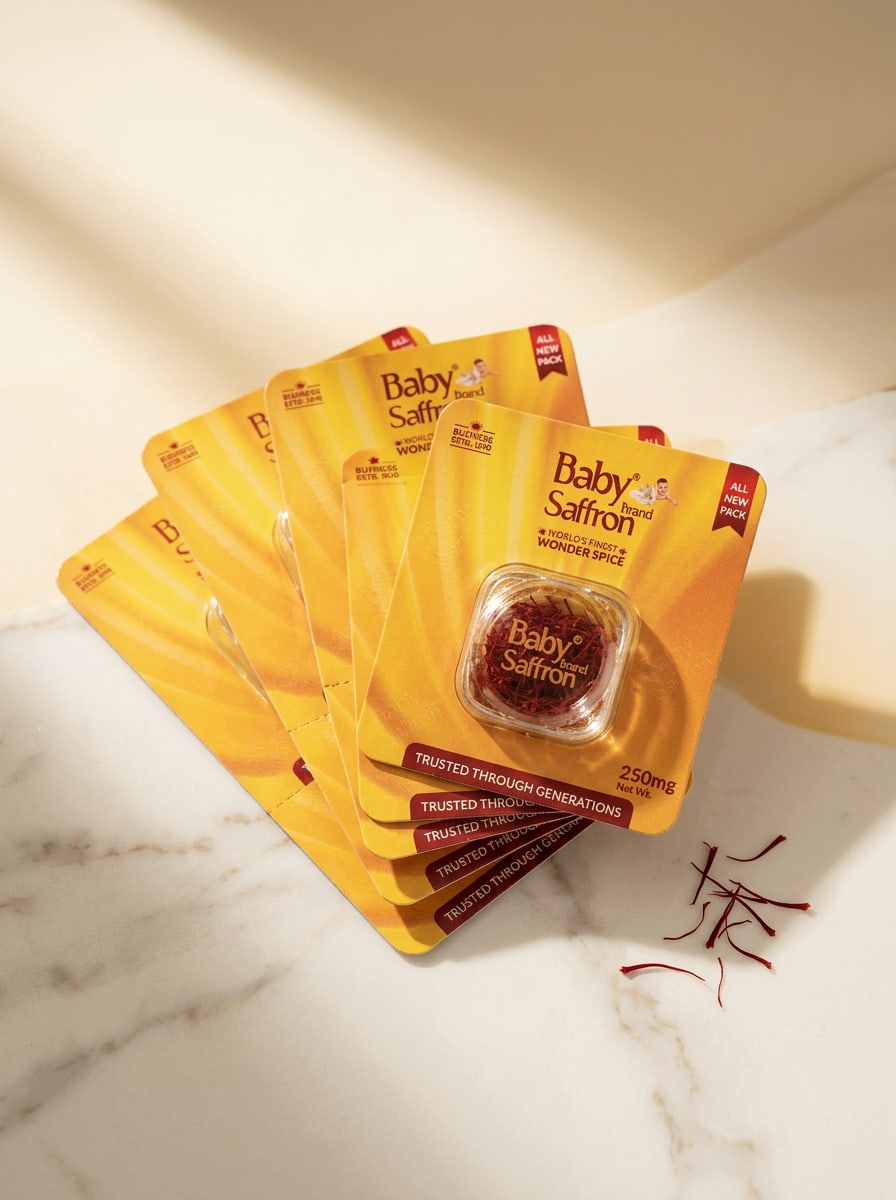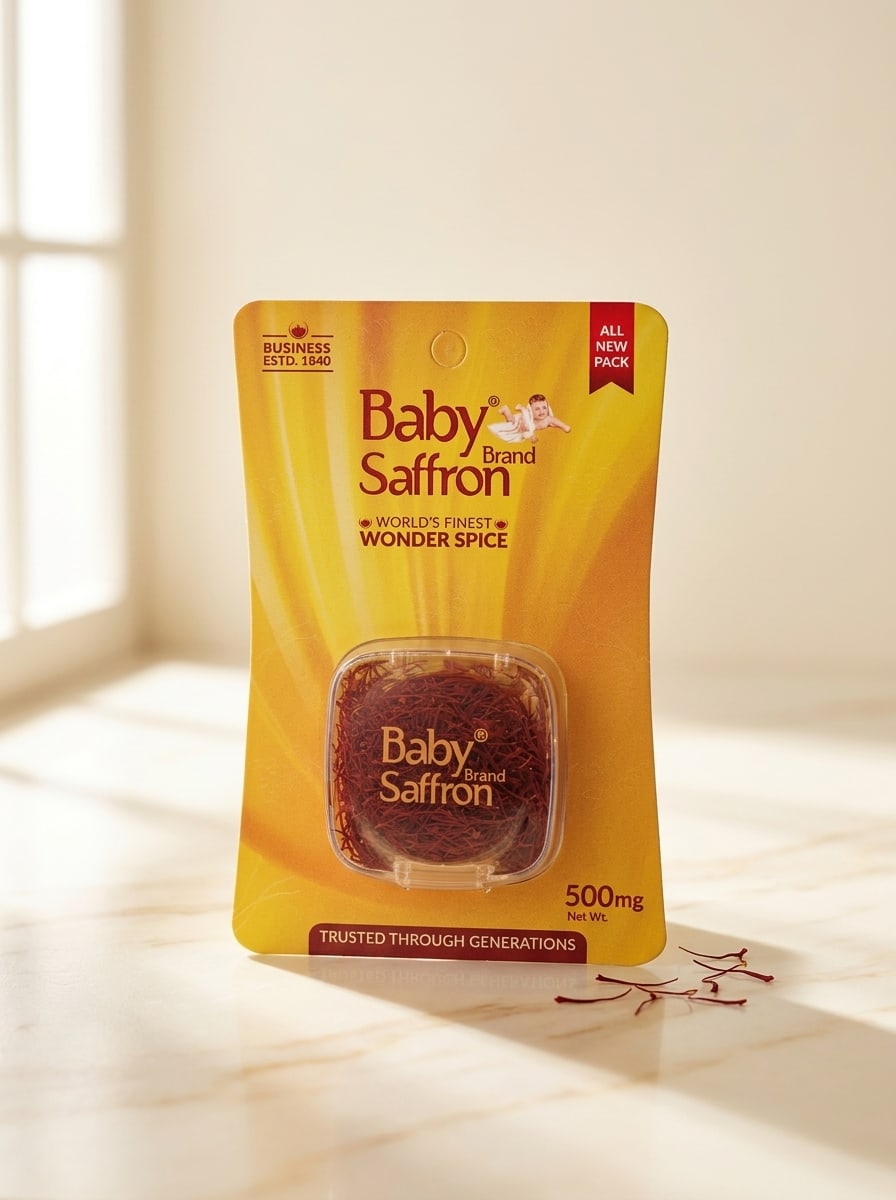

Long before anyone could measure it, Indian families seemed to know that saffron lifted something more than the colour of milk. A pinch in warm doodh on a low evening; a few threads pressed on a new mother; a jar kept for the days that needed a little brightness. It turns out that intuition has, in our lifetime, become one of the more interesting stories in nutrition science.
Saffron is now among the most-studied spices in modern wellness research, and mood is where the evidence is strongest. Across a number of randomized, placebo-controlled trials — the careful, double-blind kind — a small daily dose has been associated with improvements in low mood, in several cases performing comparably to standard options for mild-to-moderate cases, and generally with a gentle side-effect profile. Researchers keep returning to saffron precisely because the signal is unusually consistent for a food.
Why would a spice do this at all? The leading explanation points to two of saffron's signature compounds: crocin, which gives the threads their deep red, and safranal, the molecule behind that sweet, hay-like aroma. In the body these appear to support the brain's handling of serotonin and to act as antioxidants, calming the kind of low-grade oxidative stress that researchers increasingly link to mood. It is, in other words, not magic — it is chemistry that we are only now learning to read.
The dose is the part people find surprising: you don't need much. Most of the encouraging studies used roughly 30 milligrams a day — about a generous pinch of good threads. More is not better here; saffron is potent, and a little carries a long way. The practical, pleasurable way to take it is the way India always has — bloomed in a few tablespoons of warm milk for ten minutes, then stirred into a full cup of kesar doodh, sweetened lightly, sipped without hurry.
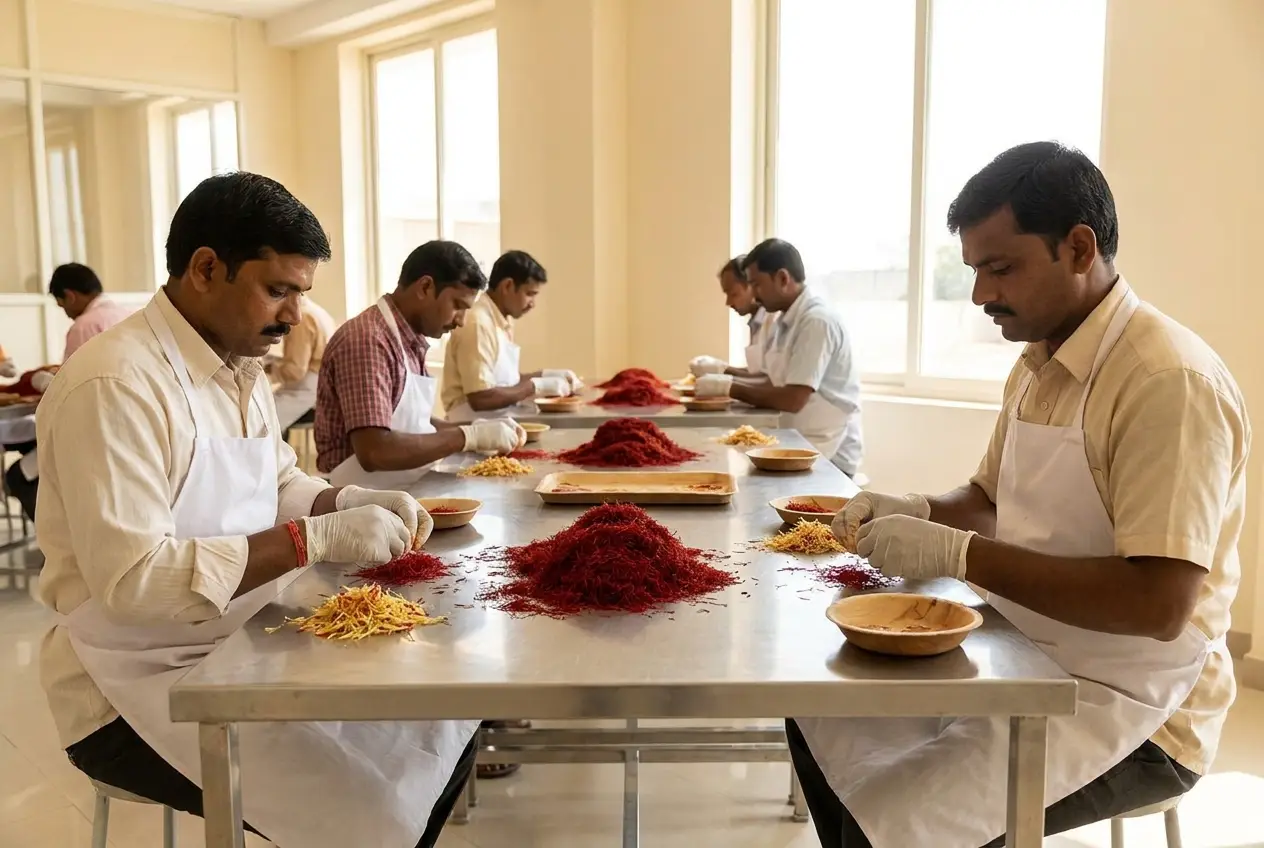
A word of honesty, because it matters. This is wellness wisdom now supported by real science, not a medicine and not a substitute for one. If your low mood is heavy or persistent, please talk to a doctor — saffron sits alongside good care, never in place of it. And because results depend entirely on the threads being genuine, this is also a reminder of why purity is the whole point: only real, deep-red kesar carries the crocin and safranal the research is actually about.
What we love most is the quiet symmetry of it. The same spice grandmothers reached for on heavy evenings is the one a lab now studies for the very same reason. The ritual was right. The science simply caught up.