
Saffron has always lived in the smaller, quieter moments of Indian life. A pinch in the morning tilak. A few strands in the milk before bed. A jar opened only for weddings and Diwali sweets.
It belongs to celebration, but also to care — to the way grandmothers warm milk on cold nights, and the way a mother adds a thread to a child's first sweet.
In pooja
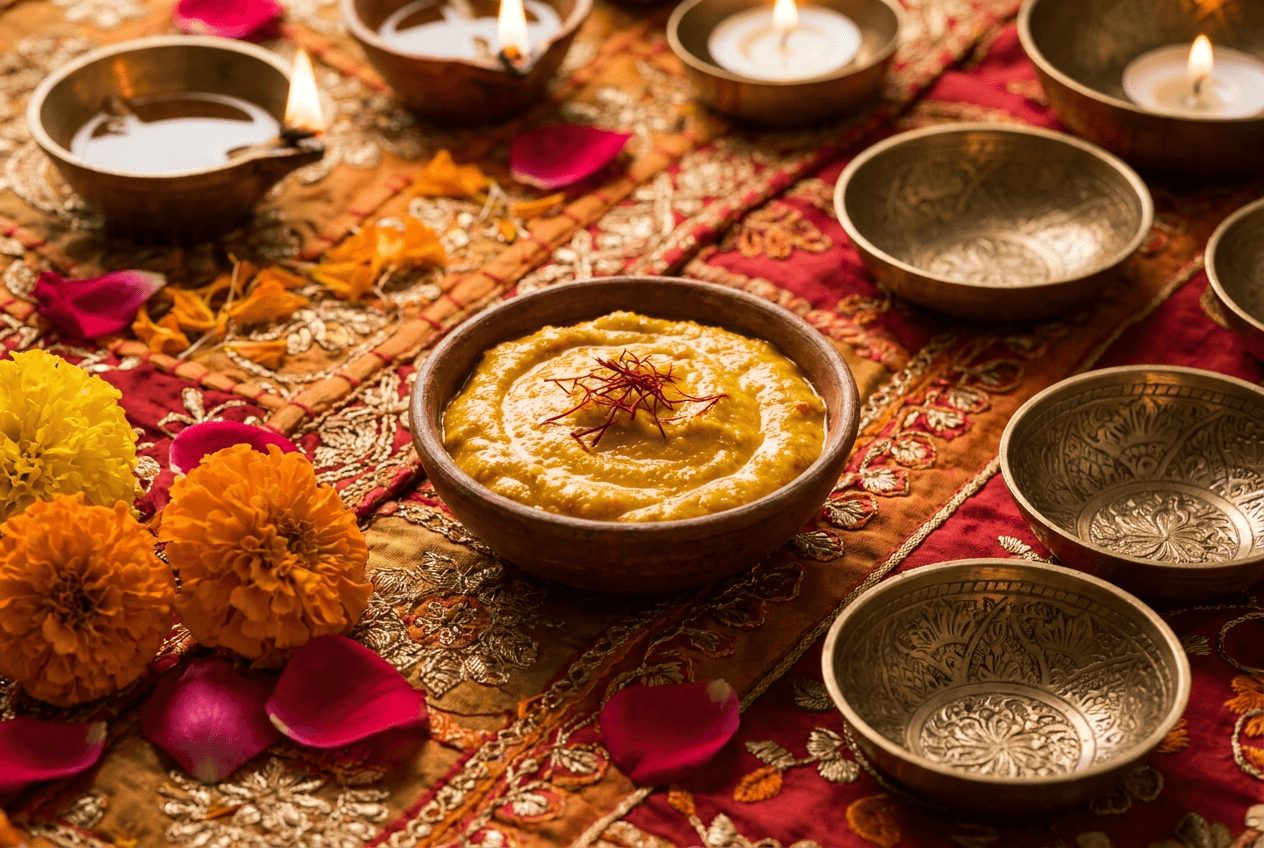
Saffron's place in worship is old and specific. It colours the tilak, tints the chandan paste, and goes into the prasad that follows. Kesar is offered because it was always the most precious thing in the kitchen — an offering is meant to cost something, and saffron always has.
That logic still holds. A pinch of real kesar in the prasad is a small, deliberate extravagance, and everyone in the room knows it.
At weddings
Bridal ubtan is where saffron does its most visible work. Ground with turmeric, gram flour and milk or cream, it is applied in the days before a wedding, and the tradition survives because it is genuinely pleasant rather than merely symbolic — the paste is cooling, the scent is unmistakable, and the ritual gathers the women of a family into one room for an afternoon.
Saffron appears again in the feast: in the pulao, the kheer, the sweets sent home with guests. A wedding is the one occasion where nobody rations it.
Through the festival calendar
Diwali is saffron's busiest season. It goes into peda, barfi, halwa, shrikhand — anything where a gold colour and a warm aroma signal that this is not an ordinary Tuesday.
Navratri brings kesar into fasting food, where the rules narrow what may be eaten and saffron does the work of making something plain feel considered. Holi brings thandai, where it sits alongside almond, fennel and pepper. Eid brings sheer khurma, where a few threads carry an entire pot of vermicelli and dates.
In everyday care
Away from the calendar, saffron belongs to the small acts of looking after people.
Warm kesar milk for a restless sleeper. A thread in the milk for a new mother. A pinch in food for someone recovering, offered as much for the comfort of being cooked for as for anything else. None of this was ever framed as medicine. It was simply the good thing you had, given to the person who needed it.
Modern research has since caught up with parts of it — saffron's compounds have been studied for their effect on mood and sleep — but the ritual did not need the validation. It had already worked for generations.
Why it earned the place
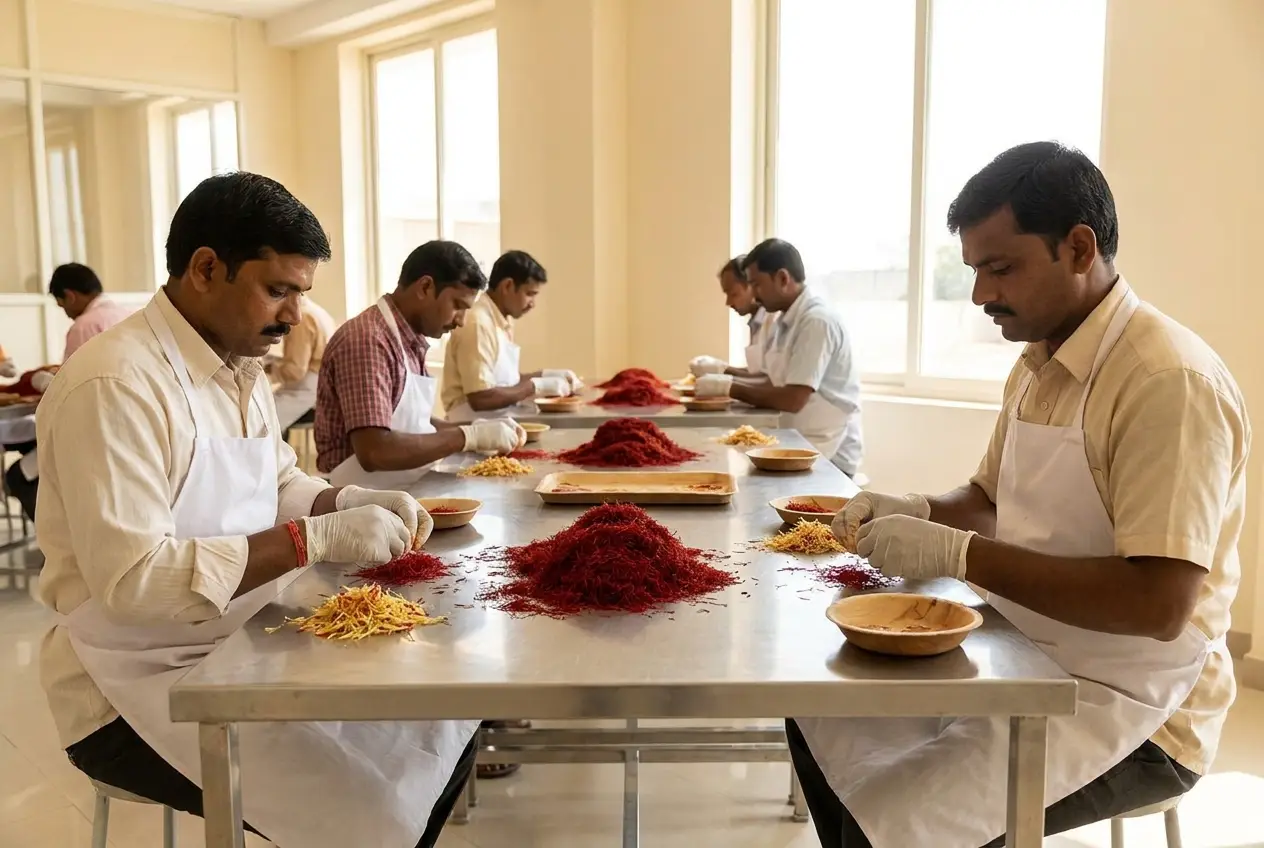
Saffron is the most labour-intensive spice on earth. Every thread is a hand-picked stigma from a crocus flower that blooms for a few weeks a year, and it takes an enormous number of flowers to make a small quantity.
That scarcity is exactly why it ended up in the ceremonies. A spice this hard to obtain was never going to be an everyday seasoning. It became the thing you brought out when the moment mattered — and the moments it marked are still the ones worth marking.