Four in the afternoon has a particular quality. The morning's energy is spent. Evening has not arrived. The day sags in the middle like a shelf holding too much, and everyone in every office in India stands up at roughly the same moment and goes looking for chai.
We tell ourselves this is about the tea. It is not about the tea.
Watch what actually happens at a tea break. Someone stands up. Someone else notices and stands up too. Two people who have been three feet apart all day, silent behind screens, walk downstairs together and talk about something that is not work. The cup is a passport. It gives you permission to stop, and — this is the important part — it gives you permission to stop *visibly*, which staring out of the window does not.
A cup of kesar chai adds one thing to this, and it is not caffeine. It is a little more ceremony.
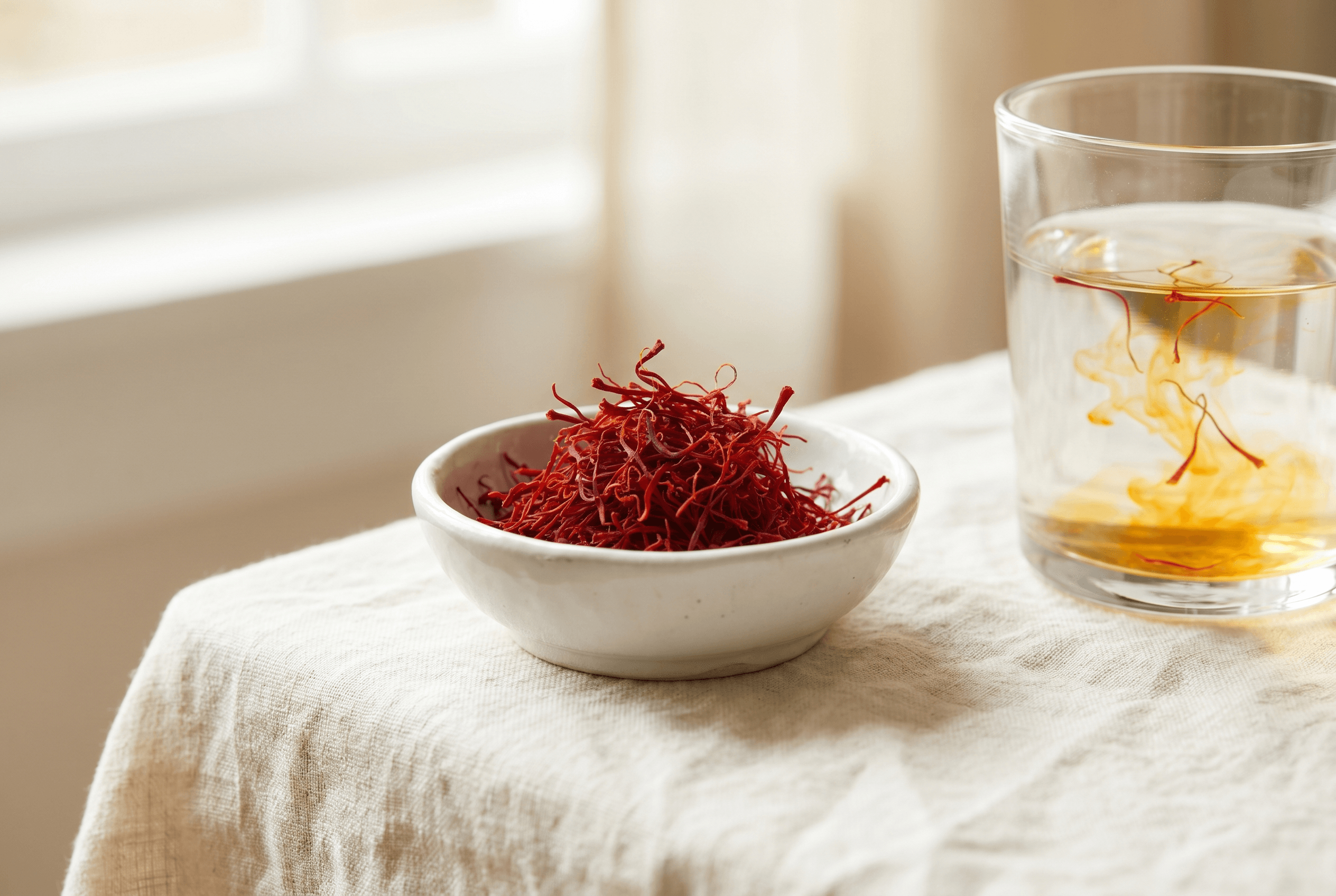
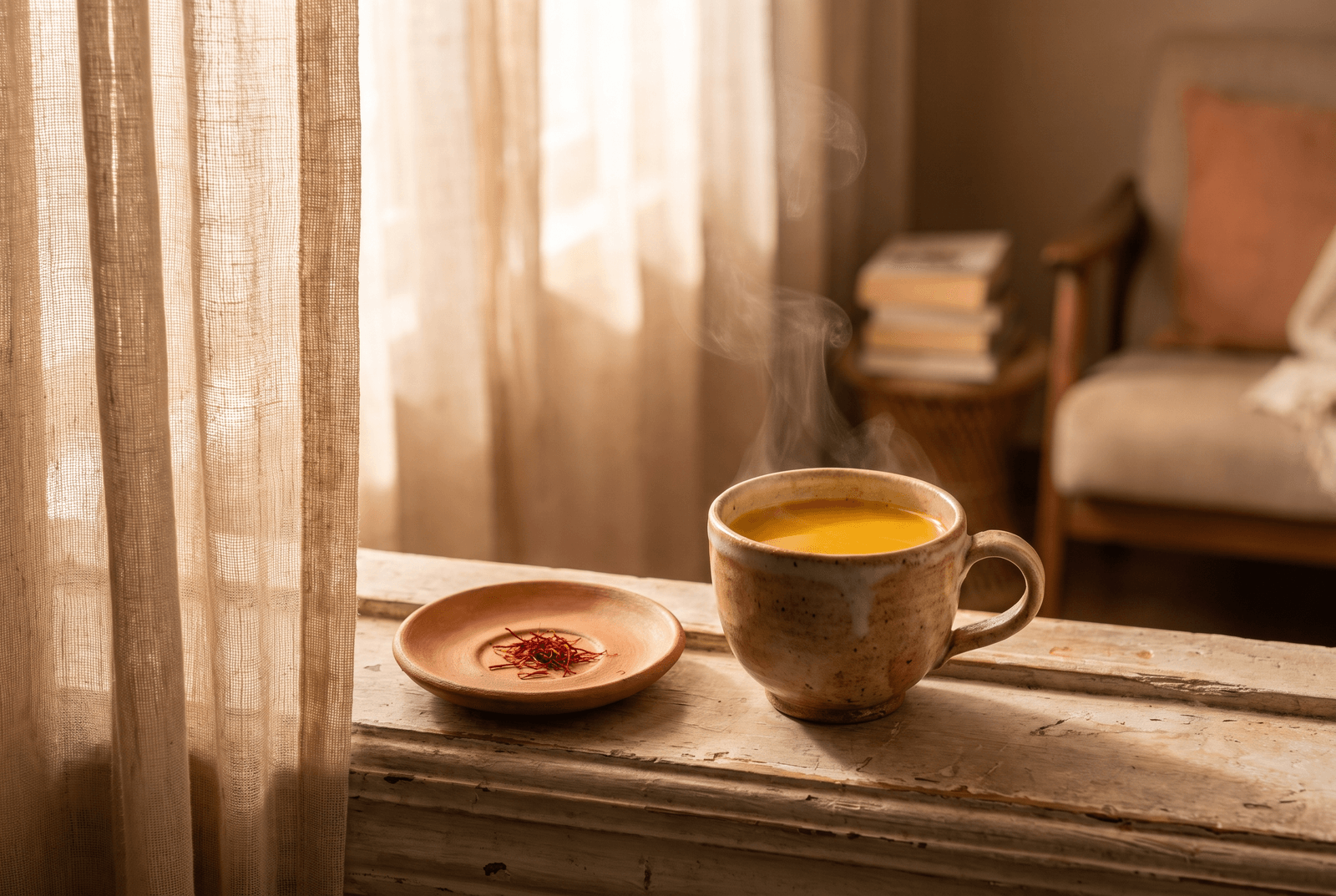
Saffron makes you slow down before you even drink it. The threads have to bloom — warmed milk, a small pinch, ten minutes while the colour lifts from pale to deep gold. You cannot hurry it and there is no point pretending otherwise. So a kesar chai break is, structurally, a longer break than a regular one. The ritual has a built-in floor. By the time it is ready you have been away from the desk for a quarter of an hour, and the thing you were stuck on at 3:45 has quietly rearranged itself in your head without you.
Then there is the cup itself: warm, fragrant, faintly sweet, the colour of late sun. It does not taste like efficiency. Nothing about it says *back to work*. That is precisely its value in the middle of a working day — fifteen minutes that refuse to be productive, in the middle of eight hours that insist on it.
Indian homes have understood this for a very long time. Kesar has always been the marker for a moment that is meant to be a little better than ordinary: the guest who has finally come, the news worth sitting down for, the evening someone stayed late to talk. Bringing that to a Tuesday afternoon is not extravagance. It is a small argument that ordinary days deserve the good tin too.
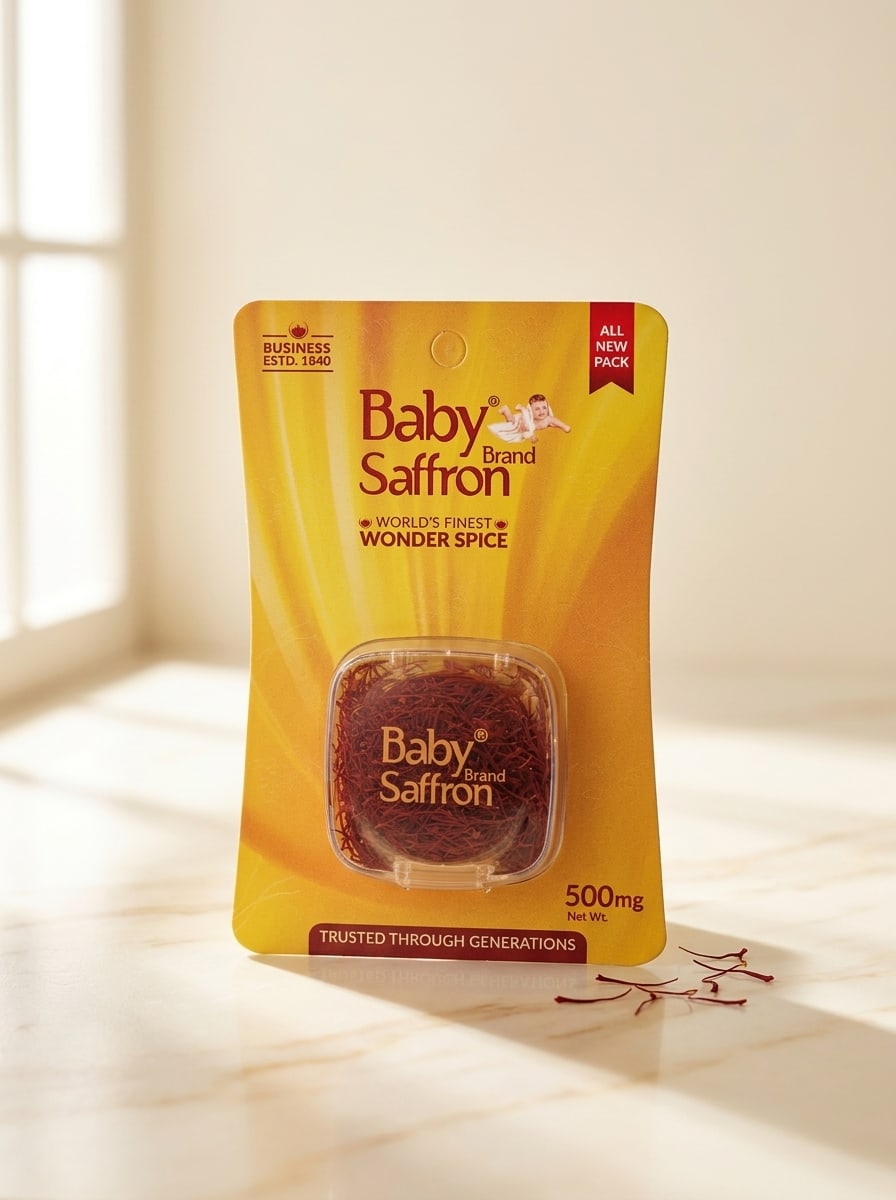
Use good threads, and use few of them. A pinch is plenty, and real saffron will give you a whole pot of deep gold and that unmistakable sweet, hay-like scent. Pale, dyed strands give you a flat colour and no perfume, and everyone at the table will be able to tell.
The tea is the excuse. The stopping is the point.