Before the day truly begins, there is the tilak — a small, deliberate mark of saffron pressed to the forehead. It is one of the oldest gestures in Indian life, and one of the quietest: a single pause for intention before the noise of the day arrives. Saffron has held this sacred place in worship for as long as anyone can remember.
Its colour is part of the reason. Saffron-gold is the colour of auspiciousness, of the sacred, of the threshold between the everyday and the holy — the very hue draped over deities and saints. To anoint with saffron is to borrow that colour, to mark a person or a moment as set apart.
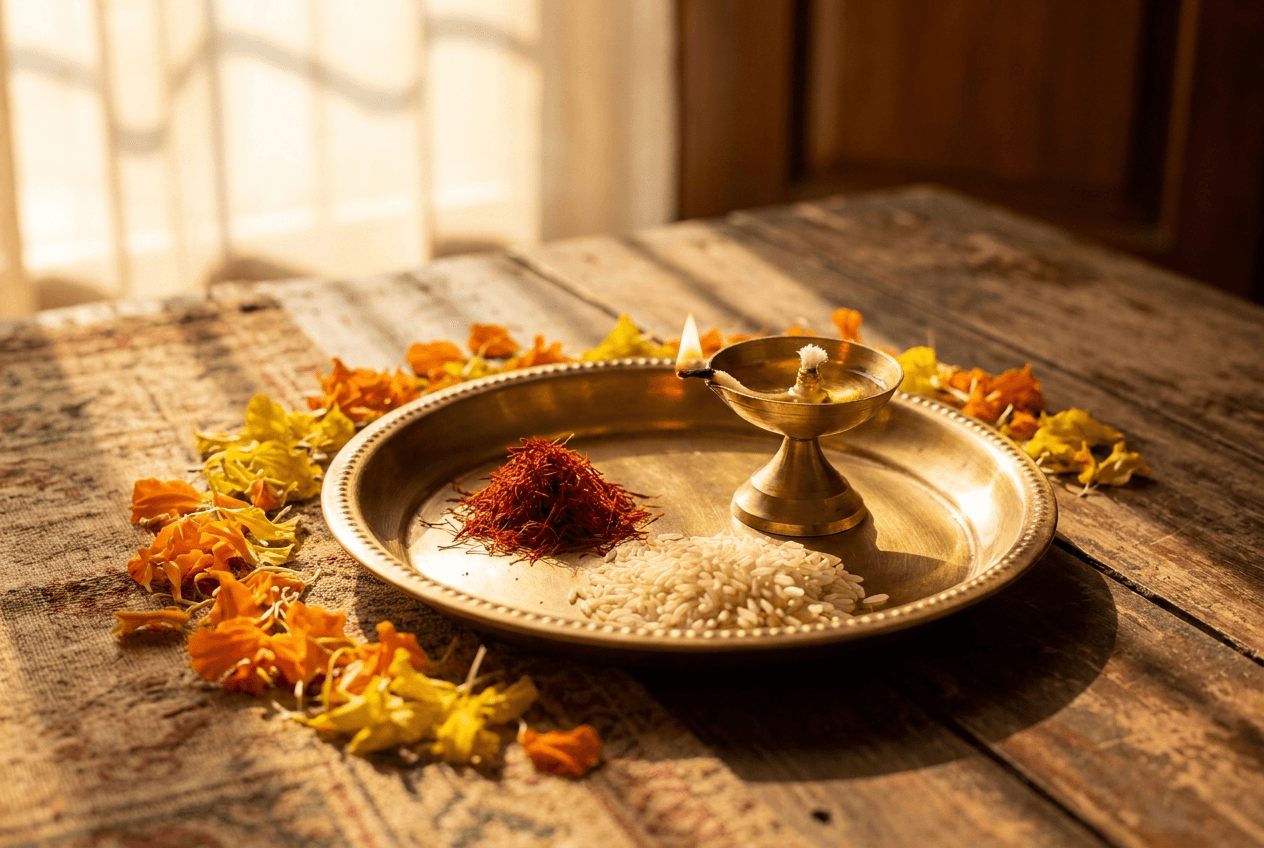
Its rarity is the other reason. In a tradition where the worthiest things are offered to the divine, a spice this precious naturally found its way onto the prayer plate. A few threads dissolved in water become the kesar used to anoint idols, to mark the faithful, and to bless new beginnings — a doorway, a ledger, a child's first lesson.
There is a practical wisdom in it too. Saffron's warm, calming aroma settles a restless mind; the small ceremony of blooming a few strands becomes its own moment of stillness before the morning rush. Worship and well-being, folded into the same gesture.
And here, perhaps more than anywhere, purity is not negotiable. The same deep-red strand that you trust in the kitchen is the one you press to a forehead or offer to the divine — there is no room for a dyed imitation in a moment meant to be sacred. It is exactly why, for these small, important rituals, families have always reached for saffron they can trust completely.