Saffron is the world's most expensive spice by weight, which means it is also one of the most faked. Dyed corn silk, coloured grass, even saffron stretched with tasteless filler — the imitations are everywhere, and they cheat you twice: once on price, and again on every benefit and bit of flavour the real thing was supposed to bring. The good news is that pure saffron is hard to fake convincingly, and a few simple checks will tell you the genuine strand from the rest.
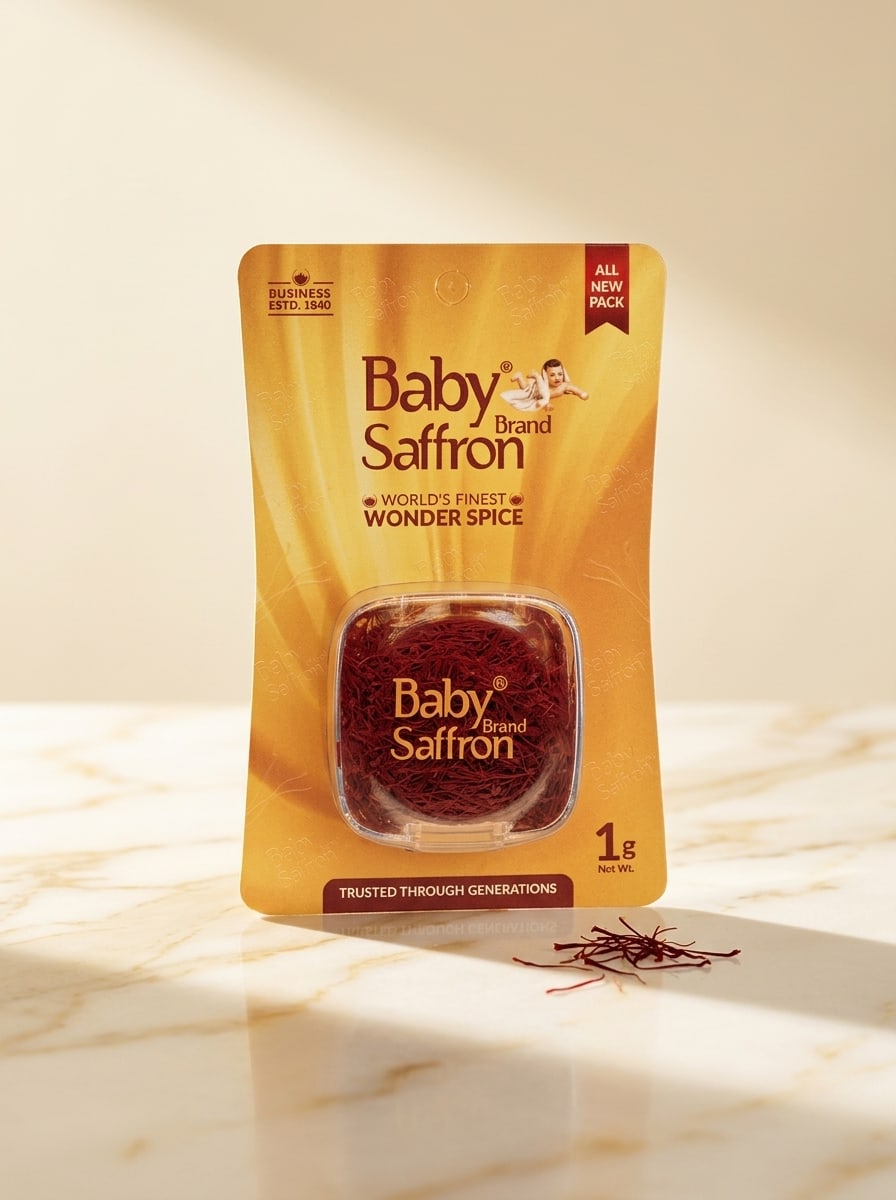
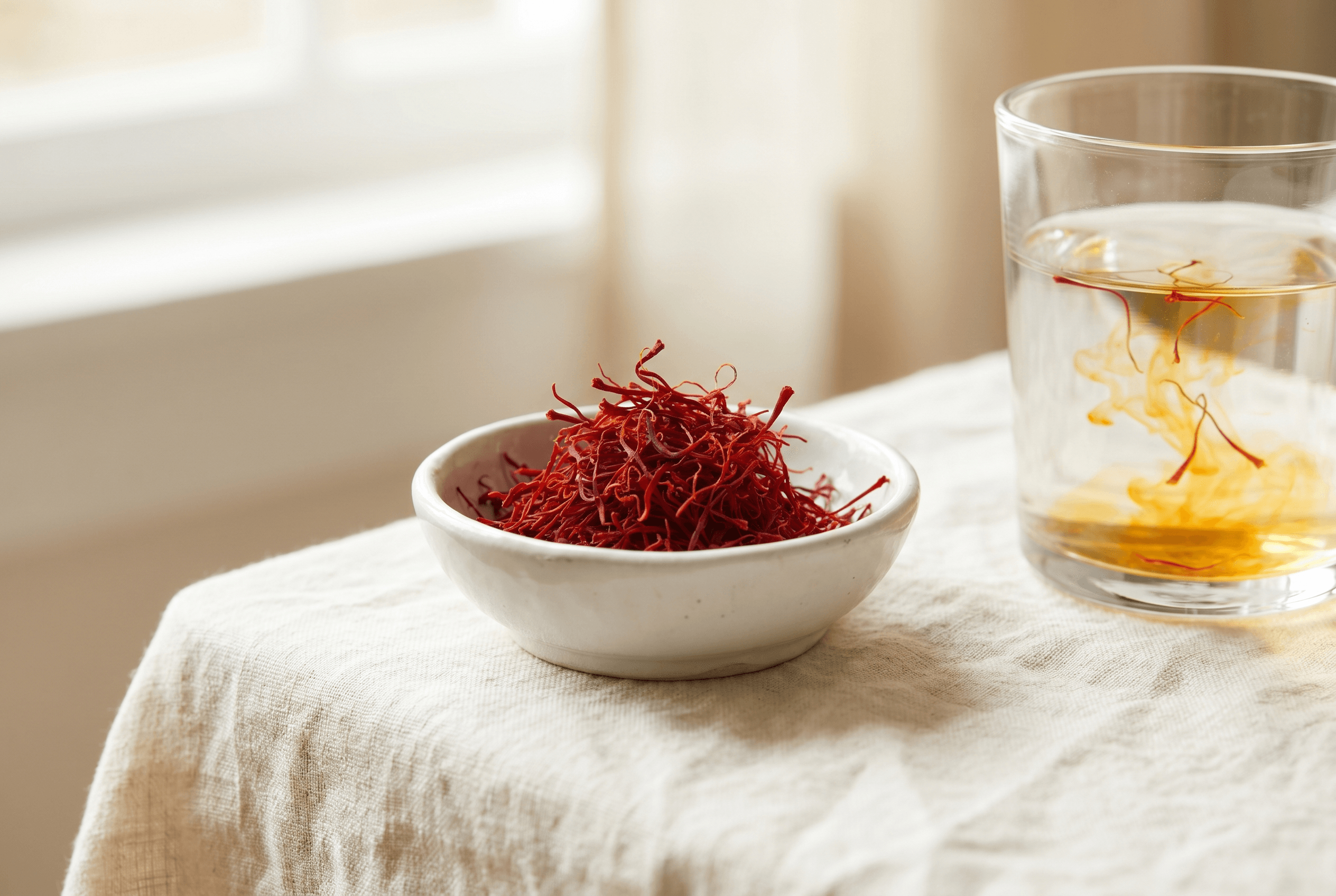
Start with the look. Real saffron threads are deep, rich red, often with a slightly trumpet-shaped flare at one end and sometimes a soft orange tip — never uniformly yellow, never pale, never dusty. Suspiciously cheap, bright-red, perfectly even strands are a warning sign, not a bargain.
Then the aroma. Genuine saffron has a distinctive, complex scent — sweet and hay-like with a gentle floral, almost honeyed note. It should never smell sharp, chemical, or simply of nothing. If you can barely smell it, there is barely any saffron there.
The most reliable home test is the water test, and it's worth doing. Drop a few strands into a glass of warm (not hot) water and watch — and wait. Pure saffron releases its colour slowly, tinting the water a clear, golden yellow over several minutes, while the threads themselves stay stubbornly red. Fakes give themselves away instantly: they bleed colour the moment they hit the water, often a reddish or orange stain, and the strands turn white as the dye washes out. Real saffron colours the water; fake saffron is the colour.
Finally, the touch test. Rub a dry thread between your fingertips. True saffron leaves only a faint golden-orange trace and stays intact; if it crumbles to powder easily, feels oily, or leaves a sticky or strongly coloured residue, be suspicious.
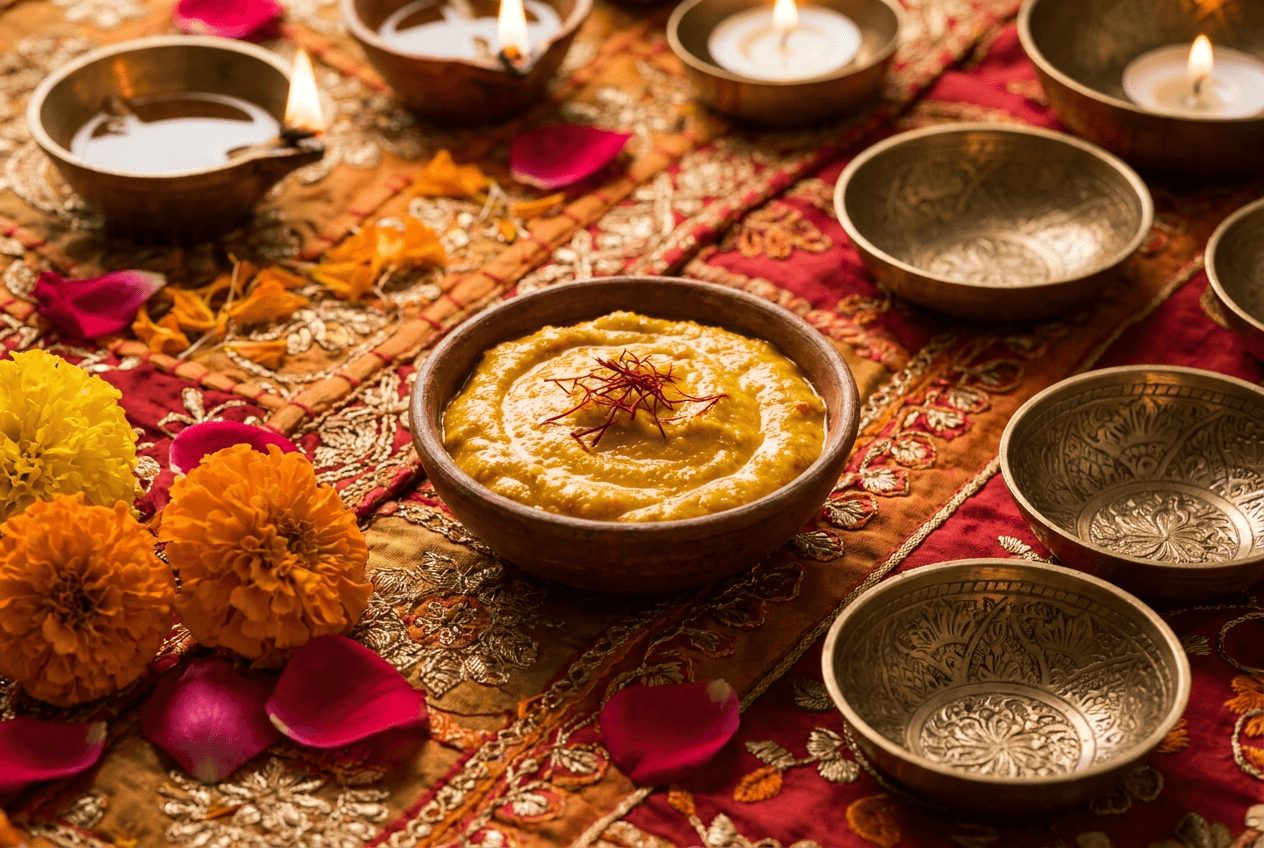
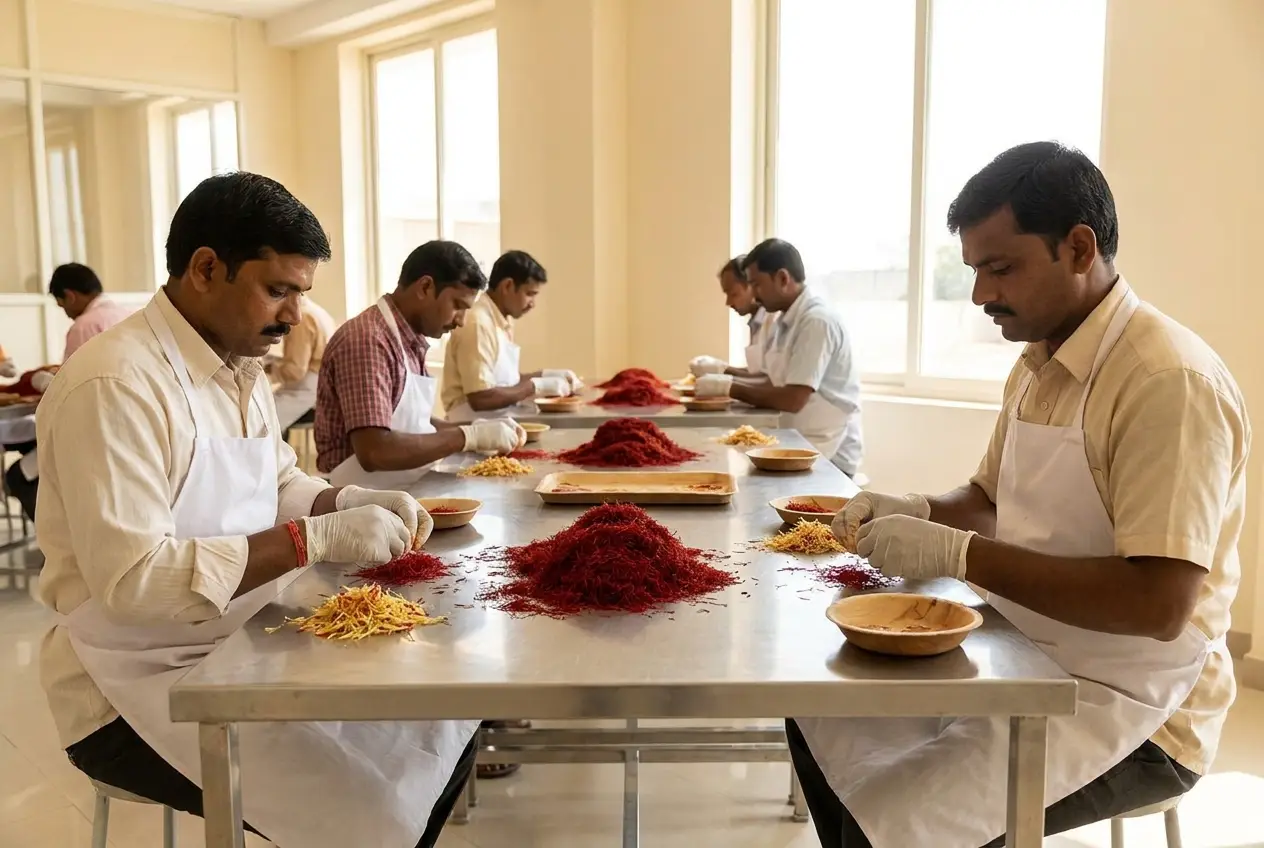
There's a fifth tell that has nothing to do with the lab: price and good sense. Real saffron is never cheap, because real saffron is never easy — each flower gives only three crimson stigmas, hand-picked at dawn, and it takes many thousands of flowers to make a single ounce. If a deal looks too good to be true, it is. But take heart: a little genuine kesar goes a remarkably long way. A pinch blooms an entire pot of kheer or a full cup of milk — which is exactly why it has been treasured, and protected, for centuries.